By Jill Furgurson and Jason Delborne
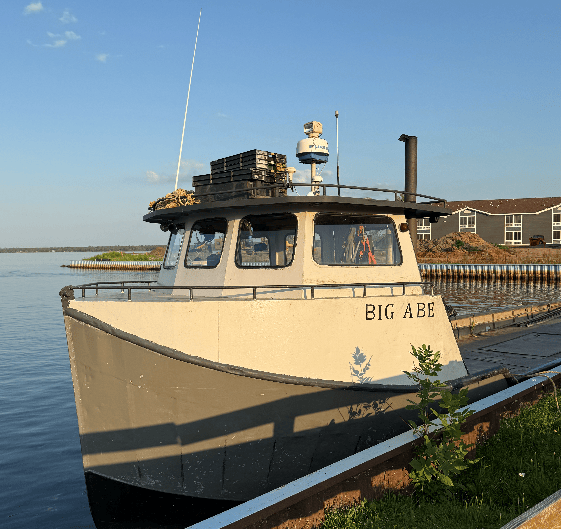
Photo credit: First author, Jill Furgurson.
This Plain Language Summary is published in advance of the paper discussed. Please check back soon for a link to the full paper.
Whitefish have been around for like 10,000 years. And they’ve obviously overcome many, many things. But I think they’re gonna need a little help on this one.
-Don Tadgerson, Tribal Elder and commercial fisher
Invasive species are changing the North American Great Lakes, harming fisheries, economies, and ecosystems. For Indigenous communities, these impacts extend beyond ecological and economic losses, disrupting ways of life grounded in relationships with culturally important fish, such as Lake Whitefish (Adikameg), responsibilities to these waters and future generations, and treaty-reserved rights.
Current methods for controlling invasive species have limitations, prompting scientists to develop new approaches that use genetic changes in invasive organisms to reduce or potentially eliminate their populations. These “genetic biocontrol” tools still involve many unknowns.
We worked with a Tribal Steering Committee and the Bay Mills Indian Community, an Anishinaabe Nation, to explore how people connected to Tribal fisheries evaluated potential genetic biocontrol tools for aquatic invasive species. Using invasive Sea Lamprey as an example, we interviewed 15 fishers, Elders, cultural leaders, and natural resource professionals.
Nearly all participants were open to considering genetic biocontrol to address harms from invasive species, but their openness came with conditions. They described fishing as a way of life (not just a job), tied to family, treaty rights, culturally important species, and responsibilities to the Great Lakes. Participants considered genetic biocontrol in the context of relationships that invasive species had already disrupted, weighing these ongoing impacts alongside uncertainties about human health, effects on fisheries and other species, and ethical questions about genetically altering living organisms.
We also asked how decisions about genetic biocontrol should be made. Some participants emphasized transparency, sustained engagement, and meaningful Tribal involvement and authority in decisions about field trials and future use.
These findings do not represent the views of Bay Mills as a whole or of other Tribal Nations. Instead, they show why evaluating new environmental biotechnologies requires more than asking if they work or what risks they pose. Relationships and responsibilities inform evaluations of whether, and under what conditions, intervention might be warranted. Fisheries managers, developers, and policymakers should recognize Indigenous Nations as sovereign decision-makers, with meaningful authority throughout the development, evaluation, testing, and potential use of these technologies.

