By Villarruel-Parma M., Wajner M., Tamburini D., Manzano J., Astegiano J., and Zamudio F
This Plain Language Summary is published in advance of the paper discussed. Please check back soon for a link to the full paper.
When we imagine an ecosystem and the species who live and interact there, who occupies the center of that network? And, who decides who holds that place?
In conventional conservation biology, food webs are often drawn as objective scientific diagrams where humans appear merely as external observers or distant managers. But for local communities who live alongside wild animals every day, humans and their livelihoods are deeply woven into the socio-ecological tapestry.
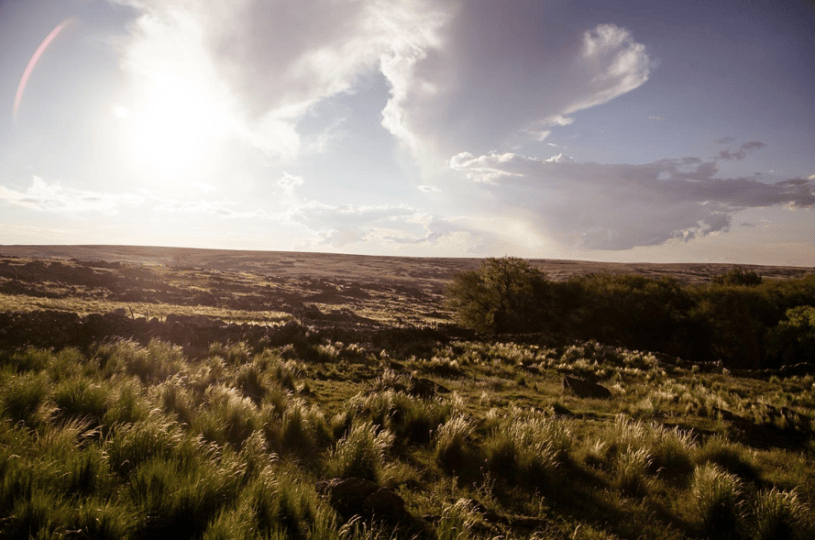
In our new study, we explored how these different perspectives shape our understanding of mountain ecosystems. Working in the contested highlands of central Argentina, we compared how local rural livestock farmers and academic ecologists perceive wildlife interactions. By asking both groups simple relational questions about who eats whom among 15 key wild animals, we constructed “ethnobiological food webs” to make visible onto-epistemic conflicts about what is considered valid knowledge, what exists, and matters, in their different worlds.
The results revealed two strikingly different pictures of the same landscape. In the academic web, the puma appeared as a classic, solitary top predator connected to many prey species but virtually isolated from human dynamics. In contrast, local farmers described the puma as an active agent in their daily lives—a predator of livestock, but also an animal involved in direct competition and conflict with humans, dogs, and eagles. Furthermore, while humans were marginal in the academic network, local farmers placed humans at the very heart of the ecosystem, directly connected to pastures, livestock, and carnivores alike.
These differences show that food webs are not neutral maps; they reflect the lived experiences and practical relationships of the people who describe them. When conservation policies rely exclusively on academic models, they risk ignoring local realities, reinforcing social tensions, and committing epistemic injustice by side-lining local voices. By making these distinct ways of relating to nature explicit, ethnobiological food webs offer a creative bridge toward more inclusive, reflexive, and collaborative conservation governance.

