By Elizabeth Damoah, Lin Crase, Jeff Connor, and Anne Poelina.
This Plain Language Summary is published in advance of the paper discussed. Please check back soon for a link to the full paper.
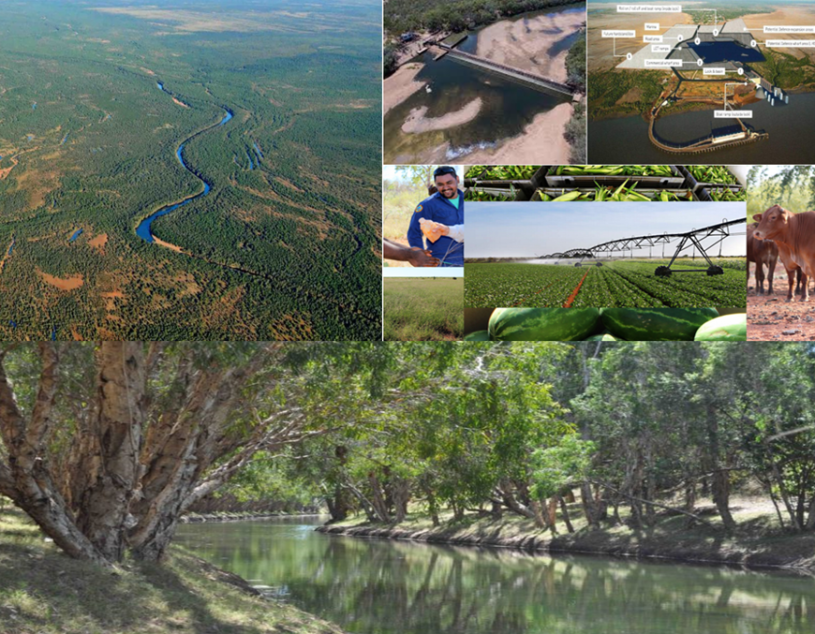
Our study is rooted in one river Country. Here, Country is an Aboriginal term that takes lands, waters, people, non-human beings, and other entities bound up with them. The wider lesson of this study is that when natural resource management and development take place on Country, fair wellbeing decisions depend largely on whose understanding of value sets the frame. Decisions about rivers, lands, and development often rest on mainstream natural resource management approaches to measuring value and assessing wellbeing. Those approaches usually treat nature as a source of benefits for people, then use that information to guide policy and project choices. We took a different starting point. Rather than fit Aboriginal views into existing tools, we began from Aboriginal ways of understanding value itself, how value is formed and made meaningful for wellbeing of Aboriginal Nations of the Martuwarra (Fitzroy) River in northern Australia.
We collaborated with Traditional Owners through yarning, careful and respectful conversations, and listened on their terms. From that work, a clear picture emerged. They framed the river catchment: (i) as a source of life and Aboriginal identity, (ii) as a teacher and upholder of protocols and Law, (iii) as a source of place-based healing, (iv) as sustenance for people and for the living systems of the catchment, (v) as a facilitator of kinships and relationships, including between people and non-human beings and among those beings, and (vi) as a holder of sacred and sentient presence. These dimensions belong together as part of how the Traditional Owners frame the value of the river catchment.
When we set the above picture beside mainstream approaches to valuation and wellbeing, we found seven specific points of incompatibility: (1) a value lens that views people and nature as inextricably bound, (2) refusal to treat different kinds of gain and loss as freely exchangeable, (3) a basis of worth that is not organised around individual self-interest, (4) reciprocal ethics and norms that help constitute the worth of the catchment rather than sit beside it as an added flow, (5) non-material expressions that cannot be reduced without loss, (6) Aboriginal relations with land and waters, grounded in Law, spirit, and responsibility, that are not the same as Western ideas of nature spirituality, and (7) a ranking of people above Country that does not hold. Together, these mismatches show a deeper clash in how Indigenous Peoples understand value from the start, not only a gap in data. Mere consultations, adding Aboriginal voices into existing frameworks, does not resolve that clash. Assessments that affect Indigenous estates need to begin from Indigenous ways of understanding value, taking the perspectives of the relevant knowledge holders. We also offer a practical checklist based on the seven incompatibilities, so researchers and decision-makers can spot when a standard approach is working from the wrong starting point.
[1] We use Indigenous Peoples and Aboriginal Nations interchangeably to refer to people who inhabited their country prior to colonisation and all others who self-identify as such by virtue of being descendants. Accordingly, ‘Indigenous estate’ is used to denote unceded Traditional lands and waters

