By Chaima Mobarak, Mario Torralba, Fernando Pulido, Laura Kmoch, Si Bennasseur Alaoui, Taha Lahrech, and Tobias Plieninger
This Plain Language Summary is published in advance of the paper discussed. Please check back soon for a link to the full paper.
Mountain landscapes are more than places where people grow food or raise animals. They also hold memories, traditions, and ways of caring for nature that people have passed down through generations. In our study, we wanted to understand what happens when these memories begin to change—and why these memories and changes matters for the future of people and nature.
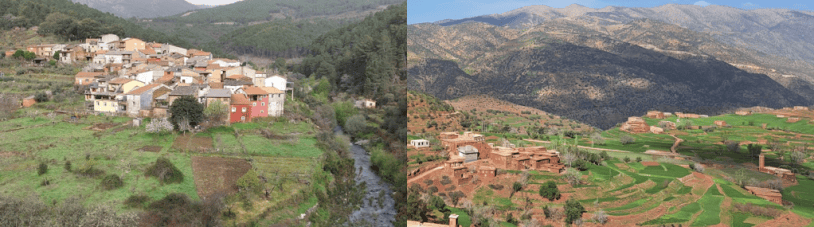
We worked with communities in two mountain regions, Ait Blal in Morocco and Las Hurdes in Spain. Through interviews with residents, we explored how people remember past landscapes, farming practices, community traditions, and local institutions. We also examined how these memories influence the way people relate to their landscapes today.
Although the two regions have different histories, we found many common challenges. Traditional farming practices are declining, young people are leaving rural areas, and local ways of managing land are becoming weaker. At the same time, memories are changing. In Morocco, people still pass on many traditions by word of mouth, making them vulnerable to young people’s disinterest. In Spain, museums and cultural projects local increasingly preserve local history, helping to keep it visible but sometimes separating it from everyday life.
Our findings show that memories are not just stories about the past. They help people cooperate, care for landscapes, and respond to environmental change. When memories remain connected to daily life, they can strengthen community resilience. When they become disconnected from farming, local knowledge, or community participation, both cultural heritage and the ability to care for the landscape can gradually decline.
We suggest that protecting mountain landscapes requires paying attention to complex dynamics. It means supporting the people, knowledge, and community practices that keep these landscapes alive. Encouraging young people to engage with local knowledge and strengthening community-led initiatives can help these landscapes remain resilient in a changing world. By learning from places where people and nature have coexisted for centuries, we can find new ways to restore stronger relationships between communities and the landscapes they live from and depend on.

