By Marco J Haenssgen, Navaporn Sunanlikanon, Prasit Leepreecha, Mukdawan Sakboon, Ta-Wei Chu, Urai Yangcheepsutjarit, Inthanon Sutjathammawong, Maria Ann Sanu, Darrel Chin Fung Tiang, Alex Mark Lechner, Sarobidy Rakotonarivo, Elizabeth Auclair, and Ivo Vlaev
This Plain Language Summary is published in advance of the paper discussed. Please check back soon for a link to the full paper.
International agreements increasingly recognise that Indigenous peoples play a central role in protecting biodiversity. This article introduces the concept of everyday environmental heritage to capture the dynamism between humans and their environment from a cultural studies perspective, which can provide a complementary pathway to understanding and supporting Indigenous peoples and local communities in conservation contexts.
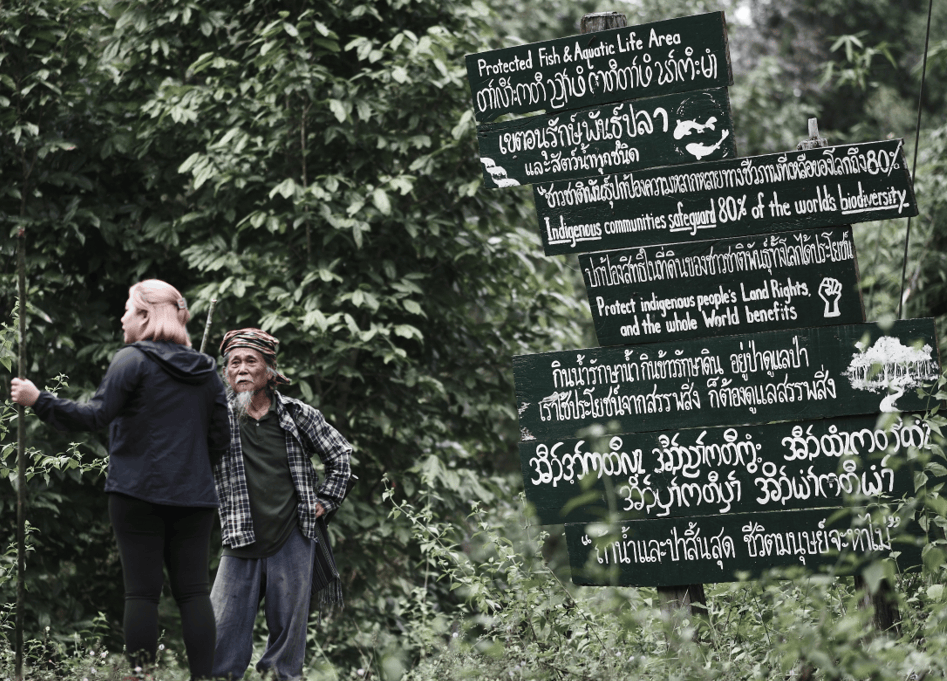
We developed and applied the concept of everyday environmental heritage in the tropical forest setting of northern Thailand, where Indigenous communities have been struggling with conservation policy that continually denies their identity, livelihood, and role in forest conservation. Based on research with two Karen and two Hmong communities in Chiang Mai Province over the period of two years, we analysed qualitative data to examine the local landscape of cultural practices and different types of everyday environmental heritage within those practices.
Three broad patterns emerged. First, people value some practices in their own right, such as cultivating and dyeing with indigo, but those practices have little relation to the communities’ conservation struggles with state authorities. Second, other forms of everyday environmental heritage carry an explicitly political dimension that villagers use strategically in their negotiations with the state. For example, residents of some villages symbolically “ordain” trees like a monk (irrespective of their own religious belief), both to discourage logging and to signal their stewardship to government officials. The third type of such heritage is still forming and in flux. For instance, the practice of firebreak clearing or youth-led environmental initiatives both have clear environmental and social relevance but communities are only gradually acknowledging such manifestations as their heritage. We also found that social and institutional networks helped these cultural practices take shape and spread between villages.
We argue that everyday environmental heritage is a useful framing to understand how conservation-related threats affect communities and how communities respond. Exploring the underlying processes of “what makes heritage” helps to understand how culture and local ecosystems interact, and how this has a bearing – for better or worse – on local livelihoods, everyday practices, and conservation practice.

