By Hanna Ekström Pigot
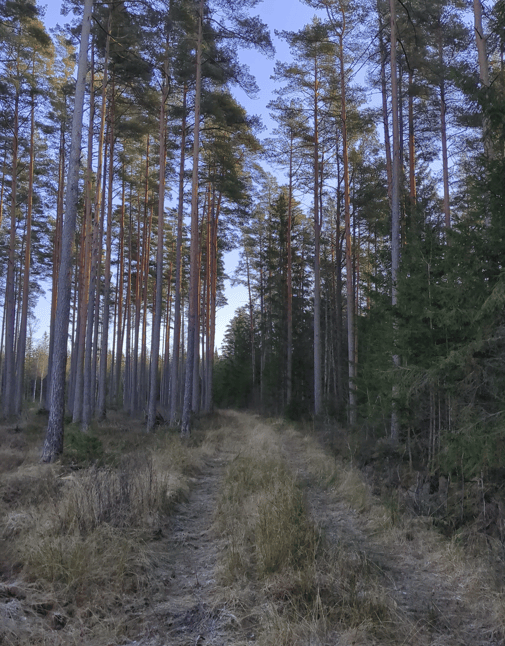
Family forest owners balance economic aspects and personal emotions when managing their forest. This study finds that having strong emotional ties to a forest does not automatically mean an owner prioritise protecting its biodiversity.
Private individuals own half of Europe’s forests, making their daily choices important to stopping biodiversity loss. In southern Sweden, most forests are privately owned, and the dominant practice is rotation forestry, where planted forests are grown and clear-cut in cycles. I interviewed 23 private forest owners in southern Sweden to explore how their personal connections to their forest shape their management decisions.
Every owner interviewed expressed that in addition to financial aspects, emotional ties to the forest play a role in their reasoning about management. However, contrary to common assumptions, strong bonds rooted in family tradition, culture, and a sense of responsibility could lead owners to focus more on timber production than on biodiversity. In those cases, taking care of the forest meant keeping a tidy, productive forest passed down through generations.
This has important implications for biodiversity policy. To scale up biodiversity protection, we need firstly, to understand what care means to different people: Landowners might all share the value of caring for future generations but see differently on what that means. Recognising this might support in understanding local opportunities and barriers to biodiversity protection. Secondly, we need to bridge local barriers by identifying the financial, cultural, and practical factors that limit motivated landowners from adopting biodiversity-friendly practices.

