By Alberto Anticoli, Jonathan von Below, Ana Alice Aguiar Eleuterio, Ritwik Kulkarni, Ahuvit Trumper, Aníbal Orué Pozzo, Enrico Di Minin, and María Piquer-Rodríguez
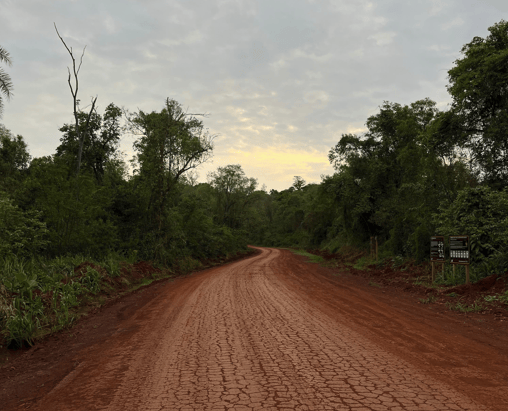
Land conflicts are urgent issues in area where limited natural resources are contested by many actors. The biocultural diverse Alto Paraná Atlantic Forests (APAF) region, between Brasil, Argentina, and Paraguay, concentrates some of the most intense land conflicts in South America. These conflicts arise from profound historical inequalities, as well as by the most recent accelerating expansion of agro-forestry. Understanding land conflicts requires many types of data, especially to track what happens in remote or underreported areas. However, existing research cannot access up-to-date, local information, creating a knowledge gap. To fill this gap, I propose an innovative methodology to collect online news in in the APAF in the period between 2020 and 2025. After, analyzed the results performing a thematic analysis; finally, I validated the findings by delivering a survey to experts from the study area.
Results reveal distinct national narrative patterns, showing that media in each country tells a different story about land conflicts. In Brazil, media coverage emphasizes how the legal system itself works against indigenous peoples, highlighting institutional processes that systematically delay or deny official recognition of their land claims. In Argentina, media narratives focus on neoliberal policies that treat land as a commodity for profit, particularly through intensive forestry models that marginalize local communities while justifying expansion in the name of production. In Paraguay, the media centers on patterns of land monopolization by powerful agribusiness interests, widening socioeconomic inequality, in a system where weak institutions enable corporate control over territory. Together, these three national patterns show how land conflicts are framed differently depending on each country’s political and economic context. In sum, national media depict the APAF as a frontier zone where government-community conflicts and corporate extraction are driving demands for environmental justice and community land control. This research shows the importance of sources such as online to investigate land conflicts in highly social-ecological areas where official data are scarce. Future studies should promote a major inclusion of local actors who are directly involved in those conflicts, and can provide crucial knowledge that may influence decision-making processes in complex regions of the world.

