By Esther Leeman
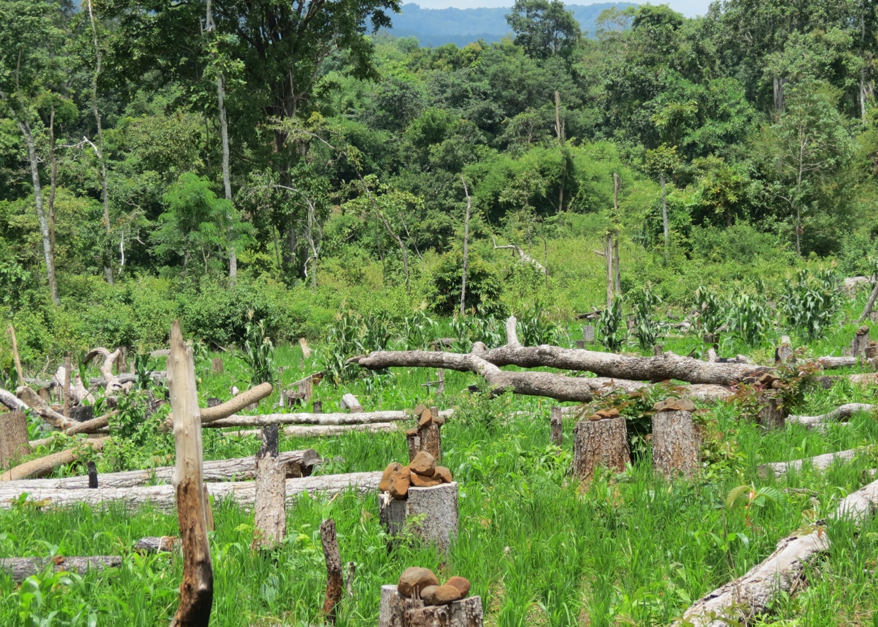
This Plain Language Summary is published in advance of the paper discussed. Please check back soon for a link to the full paper.
This paper shows that Bunong swidden farming in northeastern Cambodia should be understood as a form of care for forests, not as a threat to them. It argues that state policies, conservation programs, and development approaches often misunderstand this kind of farming because they prioritize numerical indicators of forest conservation over lived relationships with land.
Using long-term ethnographic research and ideas from care theory, the paper explains that Bunong farming involves deep relationships with land, forests, spirits, and ancestors. Cutting trees and clearing fields are not presented as the opposite of caring for nature, but as part of a meaningful and ethical way of living with the environment.
The paper also shows that outside observers often praise the Bunong as “caretakers of the forest” while ignoring swidden cultivation itself. This creates a selective and incomplete picture of Bunong life, because rice farming and rotational cultivation remain central to their livelihoods, identity, and relations across generations.
The main argument is that long-fallow swidden cultivation is not a conservation problem. Instead, it is a form of conservation practiced through Indigenous knowledge and territorial relationships. The paper calls for land and conservation policies that recognize Bunong swidden farming as a legitimate and valuable way of caring for forests and supporting Indigenous control over their territories.

