By Jay Marisca Gietzelt, Maria Tengö, Bas Verschuuren, and Kasper Kok
Read the Dutch translation here
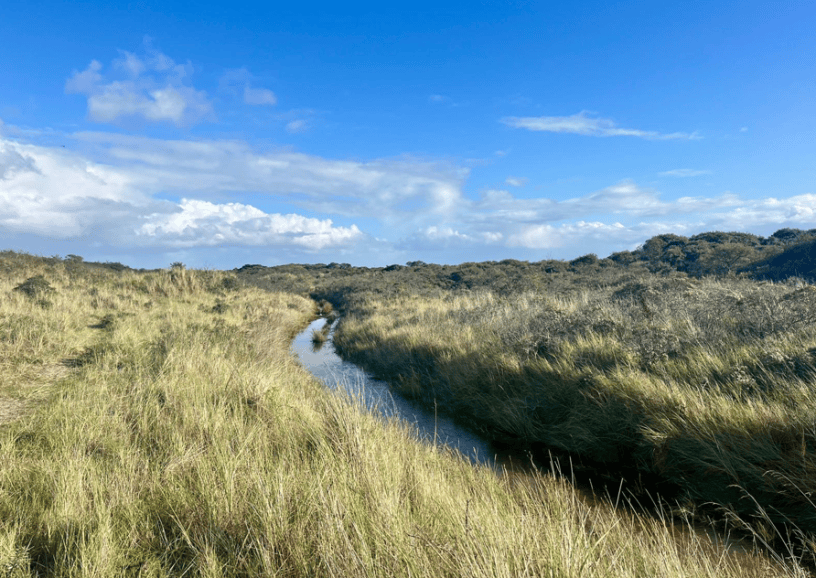
Photo credit: Interview 18
What if imagining a better future started with going for a walk?
Many visions of sustainable futures focus on technology, policy, or economic change. While these are important, they often pay less attention to something equally fundamental: our relationship with nature.
In this study, we explored how people imagine desirable futures for the Dutch Wadden region, a coastal landscape of tides, mudflats, wetlands, and islands, shaped by the constant movement of sea and land. Rather than asking participants to imagine the future inside a meeting room, we invited them to walk through places that mattered to them in the Wadden. During these walks, participants took photographs, reflected on their experiences, and later took part in an in-depth conversation that included a guided imagination exercise.
What surprised us the most was that in these conversations, the Wadden itself appeared as an active presence shaping participant visions of the future. One moment captures this particularly well. During a walk, a path we intended to follow had disappeared under water. The participant adapted, leading us along a different route. They later reflected that this was also how they imagined the future: not forcing nature to follow human plans, but responding to its rhythms and finding new paths when conditions change. The photograph they took was titled “the path that is no longer a path”.
Across the study, participants imagined futures based less on controlling nature and more on co-existing with it. They envisioned food systems, governance, and everyday practices that worked with the dynamics of the Wadden rather than against them. Sensory experiences also played an important role. The sounds of birds and wind, the smell of the sea, the taste of edible plants, and the feeling of mud beneath bare feet all became part of how participants imagined desirable futures.
These findings suggest that how we imagine the future matters. By walking, observing, listening, and engaging creatively with place, people can draw on their lived experience and connections with nature when imagining futures.
This is important because addressing environmental challenges requires more than technical solutions. Creating sustainable futures may also depend on how people imagine and relate to the natural world. By making these relationships visible, embodied and creative approaches may help broaden the range of futures we are able to imagine.

