By Juan Ignacio Ramirez, Marie Rathcke Lillemark, Lene Christensen, Majken Svendsen, Frederik Leerhøi, Piotr Gąsiorek, Martin Vinther Sørensen and Anders P. Tøttrup
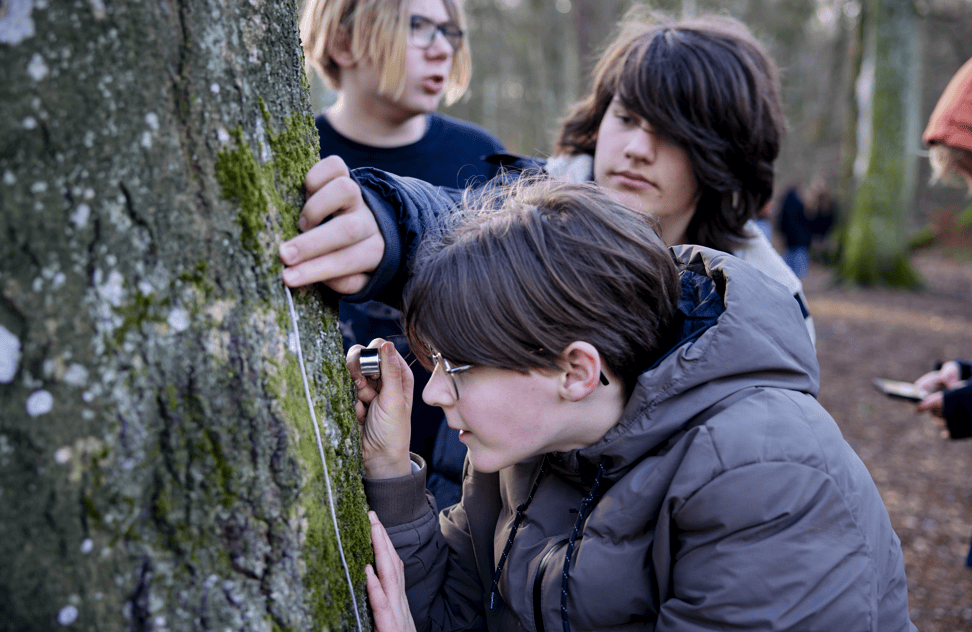
Much of the biodiversity around us goes unnoticed. Tiny organisms living in mosses and lichens are easy to overlook because they are small, hidden, and difficult to study. Yet these organisms play important roles in nature and can even include species that are unknown to science. In this study, we explored whether a nationwide school-based citizen science project could help reveal this hidden biodiversity while also engaging young people in real scientific research. We worked with teachers and students across Denmark to investigate bryophytes, lichens, and tardigrades, also known as water bears. More than 27,000 students from 443 schools collected samples in local parks, forests, and other green spaces. Using teaching materials, identification guides, videos, and classroom activities that we developed, students carried out fieldwork and laboratory exercises before submitting their findings for verification by taxonomic experts at the Natural History Museum Denmark. The project generated more than 4,000 biodiversity records and thousands of physical samples. We identified 69 bryophyte species, 29 lichen species, and 55 tardigrade species. Remarkably, 41 tardigrade species were recorded for the first time in Denmark, and at least nine species were new to science. Students were also surprisingly successful at identifying species. The educational outcomes were equally encouraging. Both students and teachers reported high levels of engagement and appreciated contributing to real scientific research. Many participants described discovering biodiversity in their local surroundings as a fun and entertaining activity. The project also reached a broad audience through media coverage, public events, and museum activities. Our findings show that large-scale school-based citizen science can simultaneously generate valuable biodiversity knowledge and meaningful educational experiences. By connecting schools, museums, researchers, and local communities, citizen science can help uncover hidden biodiversity while fostering curiosity, environmental awareness, and a stronger connection between science and society.

