By Nick Sidwell
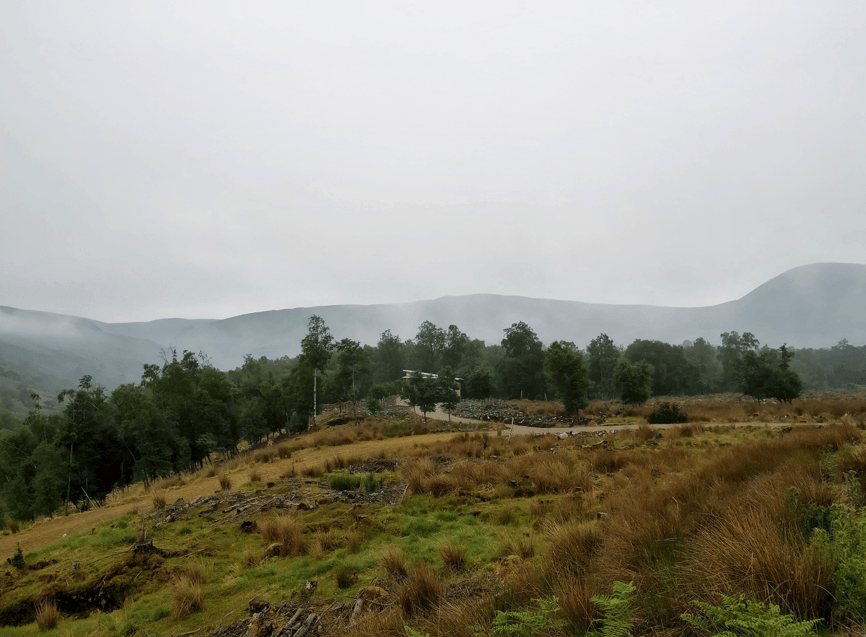
Rewilding in the Scottish Highlands often offers a vision of vibrant, dynamic ecosystems, full of restored habitats and resurgent native species. This can be easier to imagine than to achieve. In recent years, rewilding has grown significantly in stature and influence in Scotland and the wider UK. Yet the fact that rewilding can be difficult to scale hampers the narrative of wild futures. Ecosystems differ and ecological approaches that work for one project may not deliver in the same way elsewhere. Not only is variability tricky to manage between projects, but it also means that rewilding does not match the type of standardised, replicable approach that policymakers prefer.
An experimental rewilding project, just east of Loch Ness, is seeking to change this. By trialling multiple different technologies to monitor and measure the site, the Natural Capital Laboratory offers a technological template for rewilding. I visited the project in the summer of 2023, staying on site and interviewing many of the people involved.
In my paper, I focus on the Natural Capital Laboratory’s virtual reality (VR) vision of the future. This VR model is interesting because it shines a light on the growing importance of technological experiments in rewilding. These experiments are helping to write a new story of ‘high-tech rewilding’ that carries with it the novel promise of a scalable, technologically enabled approach. However, in Scotland, there are already existing stories about what a rewilded future should mean. The Scottish Government has been pushing land reform policies to increase the role of communities in Scotland’s land ownership. Rewilding advocates in Scotland have responded by promoting the place of people in their visions of a wilder future. If we follow a high-tech path, we risk restricting access to communities that lack the resources to join the journey.
There are opportunities too. The kind of small rewilding projects communities often favour can be ideal sites for technological experimentation. The challenge for rewilders and policymakers is to make the most of these opportunities while avoiding the risks.

