By Enrique Muñoz-Ulecia, Pilar Uldemolins, Alberto Bernués, Tiziana de-Magistris, and Daniel Martín-Collado
Read the Spanish Translation here
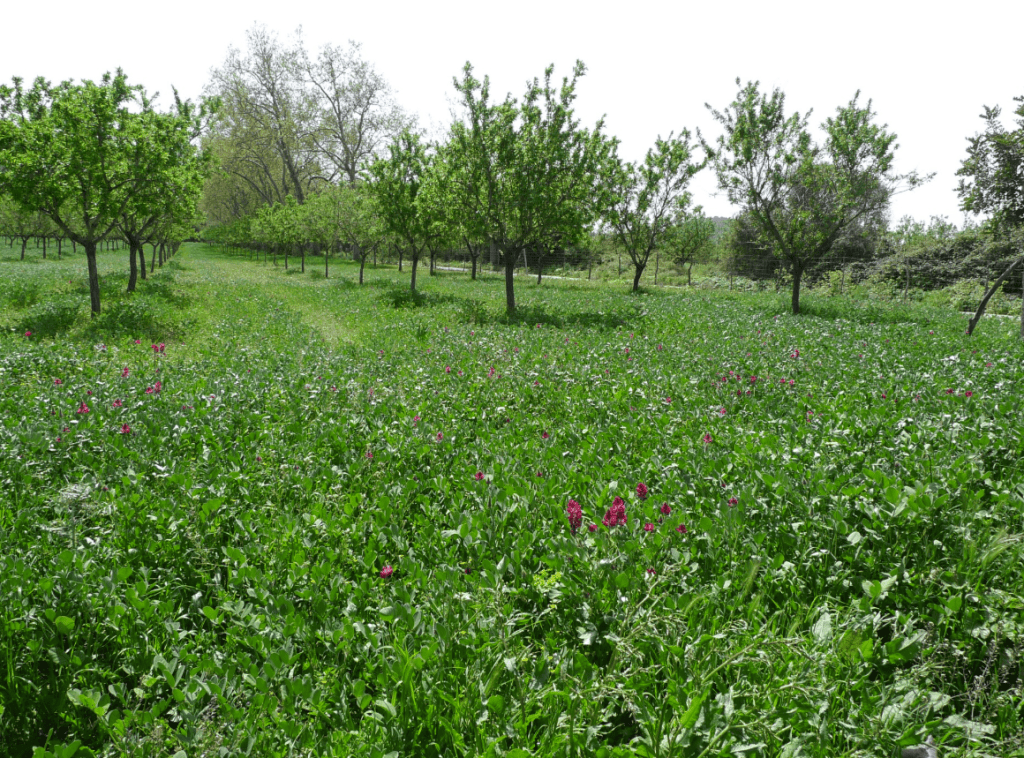
Pollinators such as bees and butterflies are essential for both food production and biodiversity. Across Europe, governments are investing in environmental measures to help protect them, including the eco-schemes the European Union’s Common Agricultural Policy introduced. However, recent farmer protests have highlighted growing tensions around these policies. Understanding why some farmers support them while others resist them is crucial for designing effective and socially acceptable environmental programmes.
We surveyed 248 farmers in north-eastern Spain to explore how psychological factors influence views about pollinators and agri-environmental policies. In particular, we examined two contrasting tendencies: environmental concern and psychological reactance, a tendency to resist rules or regulations that people perceive as limiting personal freedom.
Most farmers recognised that pollinators are important for agriculture and nature, and many acknowledged that agricultural activities can contribute to pollinator decline. At the same time, relatively few believed their own farming practices play a role in this problem. Farmers also expressed mixed views about the Common Agricultural Policy and its eco-schemes. Some saw them as useful tools for promoting more sustainable farming, while others considered them too restrictive, economically harmful, or disconnected from farmers’ realities.
We found that farmers with stronger environmental concern were more likely to value pollinators and support agri-environmental policies. In contrast, farmers with higher levels of psychological reactance were more likely to oppose Common Agricultural Policy eco-schemes and other policy measures, even though reactance was not related to how they viewed pollinators themselves. This suggests resistance may be directed more towards the policies than towards the environmental goals they pursue.
Our findings show that supporting biodiversity conservation is not only a matter of providing scientific evidence or financial incentives. Policymakers also need to consider how farmers perceive regulations and whether they feel included in decision-making processes. Policies that strengthen farmers’ sense of autonomy, flexibility and participation may reduce resistance and improve the legitimacy and effectiveness of environmental programmes aimed at protecting biodiversity.

