By Esmat E. M. Elhassan, Martin Sládeček, Petr Chajma, Lucie Burešová Pešková, Kateřina Brynychová, Kateřina Trejbalová, Muna Bilal and Miroslav Šálek
Nature tourism is growing quickly, including in desert areas. But people are often concerned that large numbers of visitors could disturb wildlife and damage natural environments. In this study, we explored whether tourism and wildlife conservation can successfully coexist in a popular desert reserve near Dubai in the United Arab Emirates.
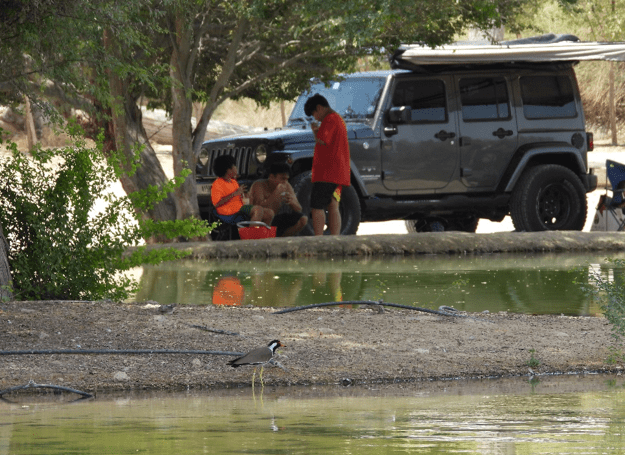
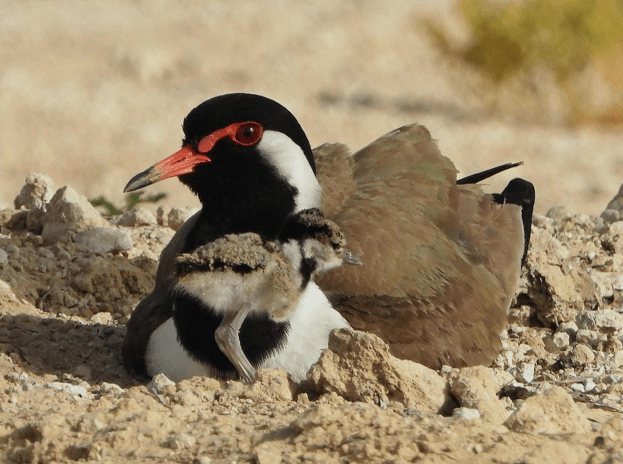
The study focused on Al Marmoom Desert Conservation Reserve, a protected desert area with artificial lakes, trees, and islands created to support wildlife and provide recreational opportunities for visitors. We monitored bird populations over nine years and examined the welfare of one common and conspicuous nesting bird, the red-wattled lapwing, which breeds close to roads and tourist sites. We found that bird diversity in the reserve increased strongly over time during both winter and breeding seasons. We recorded more bird species each year, including many rare and threatened species, and the total number of birds also grew substantially. These findings suggest that creating lakes, planting vegetation, and protecting parts of the reserve helped wildlife thrive even in a harsh desert environment.
Tourism was much heavier on weekends, when thousands of people visited the lakes for camping, picnics, and recreation. Even so, the effects on birds were surprisingly small. Parent birds spent slightly less time sitting on their nests during busy weekends, but tourism did not reduce nesting success or chick condition. Birds appeared able to cope with temporary disturbance, partly because quieter weekdays and protected refuge areas gave them opportunities to recover.
The results show that tourism does not always have to conflict with nature conservation. Careful planning, visitor management, protected quiet areas, and long-term wildlife monitoring can help people enjoy nature while still protecting animals and biodiversity. The study provides an example of how desert reserves and other sensitive natural areas can support both tourism and conservation at the same time.