By E. Egorova
Photo credit: Ekaterina Egorova
When young people are forced to leave their homes as refugees, they often lose much more than a place to live. They also lose routines, friendships, a sense of familiarity, and a feeling of belonging. In this study, I explored whether taking part in nature-based citizen science activities could help newly arrived refugee youth build stronger connections with their new surroundings.
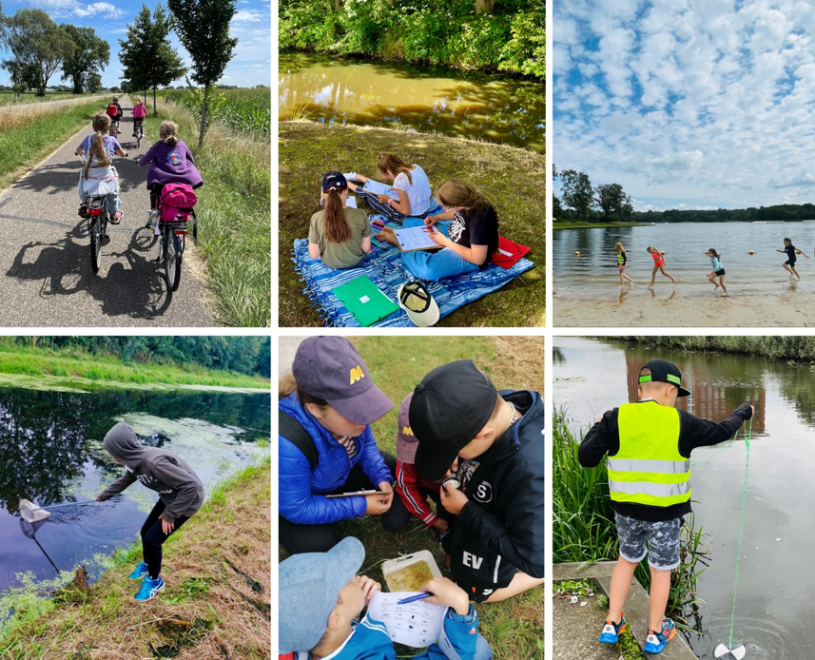
I worked with a group of children and teenagers from Ukraine who had recently arrived in the Netherlands. As part of a citizen science project called Water Rangers Twente, they spent time exploring rivers, ponds, and canals in the city where they were living. Working in teams, they cycled to different locations and used simple scientific tools to measure water clarity, collect water samples for analysis, and record observations of aquatic plants and animals for a broader Dutch citizen science project that monitors the condition of small water bodies across the Netherlands. Participants also completed field journals about the recreational qualities of these places, including how attractive and suitable they were for children and young people.
Interviews, group discussions, observations, and drawing activities helped me understand how they experienced the project. I found that the project did much more than teach participants about the environment. It helped them discover new places, build friendships, feel more confident and independent, and create positive memories connected to their new city. Spending time outdoors also reminded many participants of meaningful experiences from their lives before migration.
These findings suggest that outdoor science activities can help vulnerable young people feel more connected to places and communities. Rather than being only a way to collect environmental information, nature-based citizen science can become a supportive space where young people learn, explore, and begin to feel at home again.

