By Anuradhi Dulangi Jayasinghe, Georgette Leah Burns, Johanna Nalau, and Duan Biggs
Human-wildlife interactions are complex and extend beyond dichotomies such as conflicts and coexistence. Hence, even amidst rising conflicts, there are people who continue to struggle to peacefully share their lands with wildlife. However, the influences of community decisions to coexist with wildlife has received less attention in human-wildlife interaction studies, especially relevant to endangered wildlife such as Sri Lankan elephants (Elephas maximus maximus).
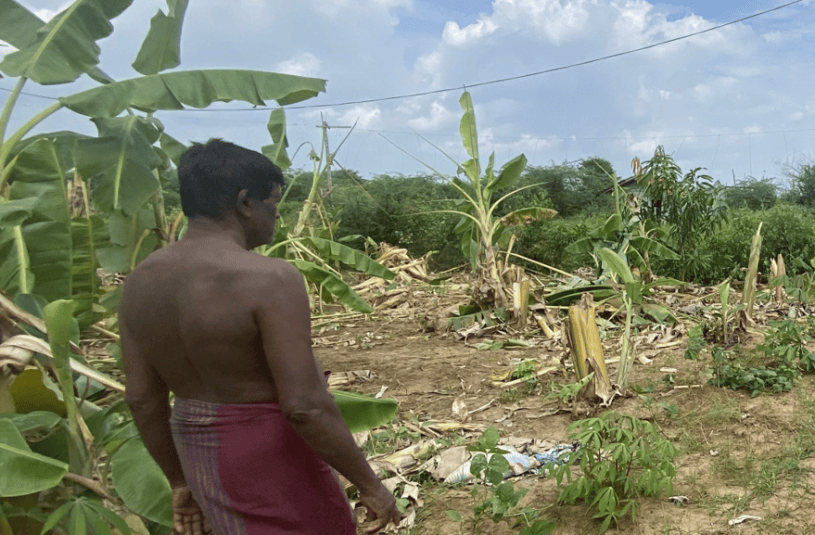
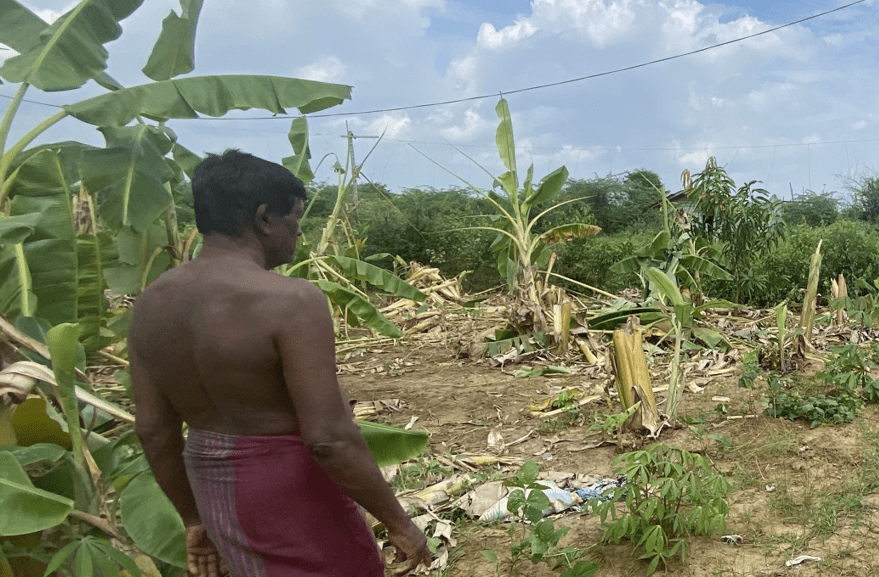
To explore this, we conducted an ethnographic study that included focus group discussions, transect walks and participatory observations with farmer communities in Walsapugala village in Hambantota district of Southern Sri Lanka. This village is adjacent to a managed elephant reserve that is only gazetted and due to the absence of enforced regulations, illegal activities – such as rock quarrying – take place within this reserve. Consequently, elephant habitats continue to decline, forcing elephants to enter bordering villages like Walsapugala in search of food and water. Hence, the farmers struggle to coexist with elephants as they once did while facing frequent crop raiding, damages to infrastructure, consecutive sleepless nights to guard farmlands, injuries and fatalities, and limited government support.
During our study we understood what influence their decisions coexist as their values (e.g. respect), norms (e.g. tender words to call elephants), and knowledge (e.g. changes in elephant behaviours) – which we call combinedly as the social context. We categorised these contexts into seven themes : (1) Community strength and social cohesion, (2) Ethical stewardship and emotional connection, (3) Cultural inheritance, (4) Social dynamics and group interactions, (5) Ethical integrity and social critique, (6) Community learning and practices, and (7) Multi-dimensional awareness.
These themes will provide a comprehensive framework for designing context-sensitive conservation approaches as they highlight actionable priorities. For instance, conservation programs should respect and reinforce community values, norms, and knowledge that influence human wildlife interactions. This includes incorporating their local linguistic practices, beliefs and ethics into environmental education and outreach programs.

