By Mara de Pater, Aniek Hebinck, Symke Nieboer, Anita Lazurko, Robbert Biesbroek, Laura Pereira, Elizabeth Díaz-General, Aron Teunissen, Samia Baadj, Anna Chilton, Seweryn Krupnik, Richard Kock, Klemetti Näkkäläjärvi, W. Mathijs Rozemuller, and Eirini Sakellari

Biodiversity in Europe is declining fast, and we urgently need big changes in how we care for nature. In our research, we wanted to explore how such deep, long‑term change could happen. To do this, we worked with people from different backgrounds – policy, science, civil society, business, and Indigenous communities. Looking forward to 2050, we asked them to imagine what a “nature‑positive Europe” could look like and then developed pathways for how we might get there.
Together, we created three different pathways, each based on a different way people value nature. One pathway, Dòigh Nàdair (a Gaelic phrase meaning the way of nature), focused on relationships between people and nature, highlighting community action, biocultural knowledge, and stewardship. A second pathway, NaturAll, emphasised living within ecological limits, reducing consumption, and restoring space for nature. The third pathway, Return to Nature, centred on stronger public institutions, expert guidance, and the mainstreaming of climate and biodiversity goals across society.
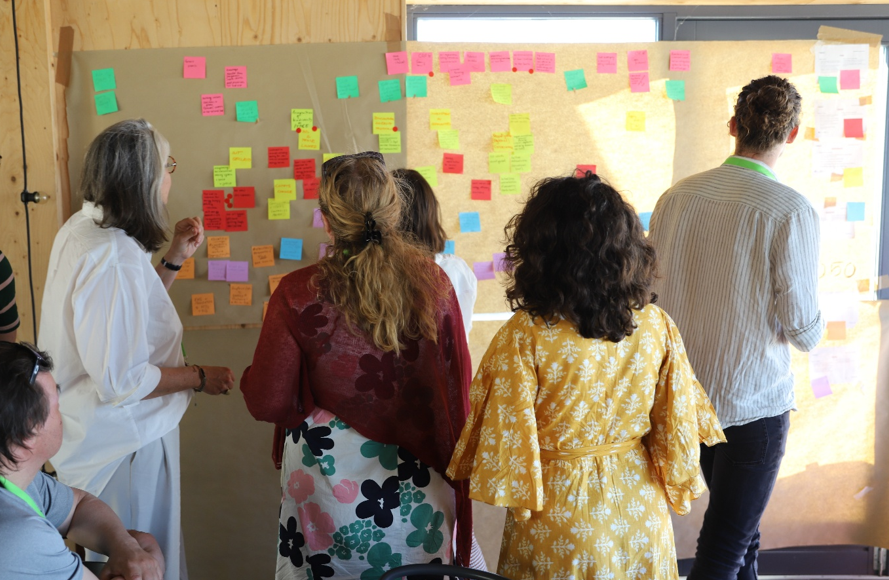
We co‑created these pathways during a 2.5‑day workshop using creative and interactive methods. Participants brainstormed ideas and actions to get to a desired future in 2050, discussed the conditions and consequences of these steps, and reflected on their own assumptions about transformative change. After the workshop, we conducted interviews and a validation meeting to deepen our understanding of the choices participants made.
Across the pathways, we found shared ambitions for restoring nature, reducing harmful activities, and rethinking economic systems. But each pathway imagined very different routes: one driven from the ground up, one by strong regulation and sufficiency, and one through coordinated governance and innovation. These differences reflect the diverse ways people think change happens – whether fast or slow, through communities, policies, or institutions.
By developing several pathways rather than one, our work shows there is no single solution for achieving a nature‑positive Europe. Instead, embracing multiple perspectives can help decision‑makers understand options, anticipate challenges, and inspire more imaginative and ambitious action.