By William Sharkey, Aidan Keane, Pablo Sinovas, Vimean Huot, Rachna Thim, Maliya Yorn, and E.J. Milner-Gulland
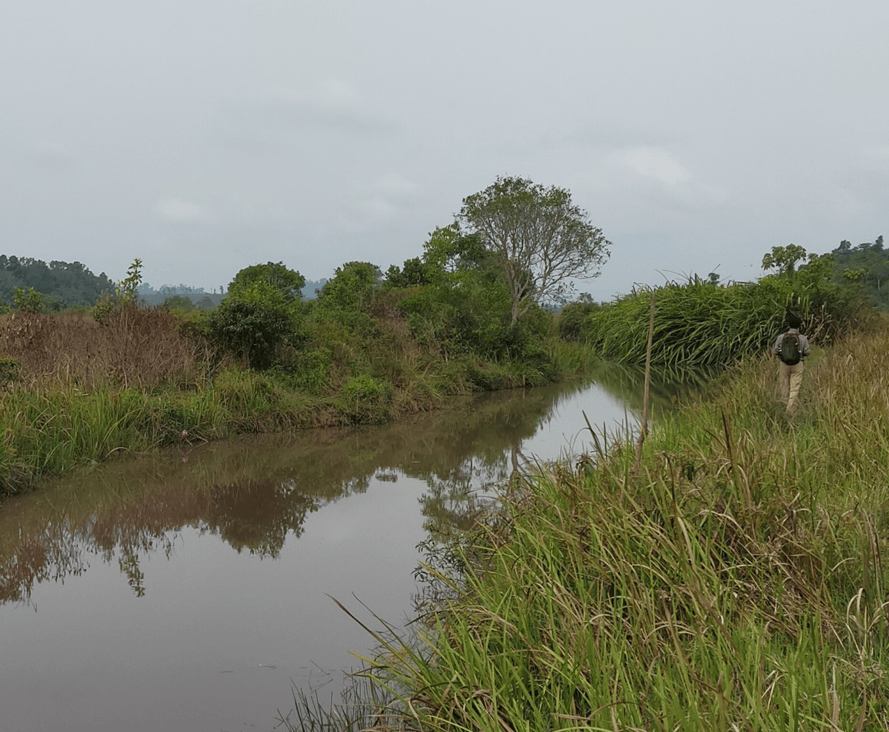
People living inside or close to protected areas can contribute to protected area management by helping enforce rules intended to safeguard nature and conserve biodiversity. However, our understanding is limited when it comes to how managers can engage local people and the experiences of those who participate.
In this study, we evaluated a scheme where local people are recruited as community wardens to carry out patrols and report any illegal activities they encounter. This scheme provided a useful case study as it has similar characteristics to other community-based approaches to protected area law enforcement. We carried out this evaluation by first developing a theory of change to show how, in theory, the scheme should work. A theory of change illustrates the steps that link activities to intended outcomes and impacts, and maps out the assumptions that underpin these steps. To test whether these assumptions held in practice, we focussed on two sites where community wardens work. We examined these assumptions through interviews with local residents, community wardens, and staff from a non-governmental organisation who work to support the scheme.
We found that the area where community wardens work had undergone much social and economic change. As such, some of the important assumptions underpinning the design of the scheme no longer held. This means the scheme might no longer benefit community members or work effectively to conserve endangered wildlife.
Involving local residents in enforcing conservation rules is not straightforward, and conservation organisations may not be able to tell whether involving local people in enforcing conservation rules is likely to be effective. To help address this, we offer a framework to help conservation organisations assess the extent to which the assumptions that underpin the design of community-based approaches to protected area law enforcement are likely to hold in their particular circumstances.

