By Samantha Kreling, Lindsey Bartholomew, Jessica Duling, Thya Tran, Ellen Reese, Yasmine Hentati, Christopher Schell, and Laura Prugh
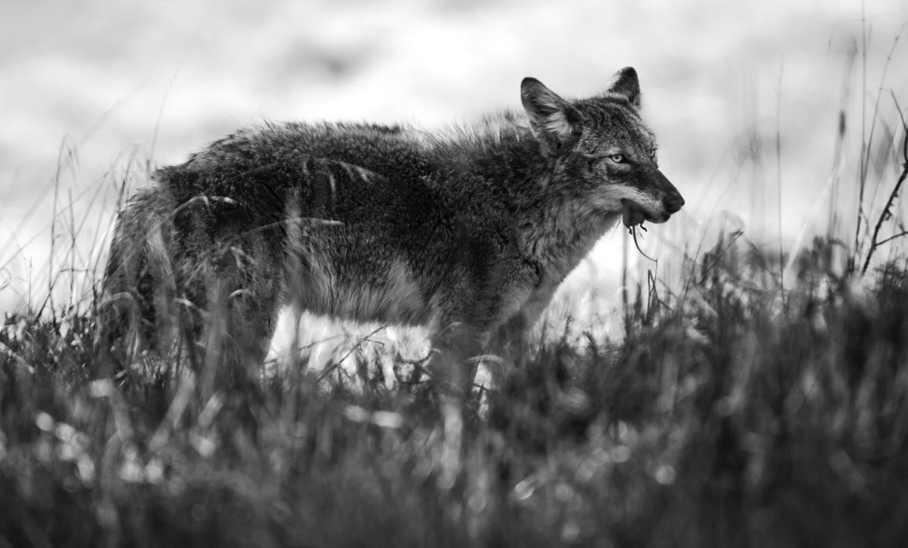
Cities create new challenges and opportunities for wildlife. In urban areas, animals may eat a mix of natural prey and human-related foods, and both the environment and social factors, such as income and population density, can shape these diets. If animals are eating lots of human foods, then we’d also predict that their diets—that is, the mix of foods they eat—would reflect the diet of humans within their range. In this study, we examined how these social and ecological factors relate to the diets of coyotes in Seattle, Washington.
We predicted that coyotes living in lower-income neighborhoods, including human food deserts with limited access to fresh food, would eat more human-related foods. We also expected that coyotes in wealthier areas with more tree cover would rely more on natural prey. To test this, we collected coyote scat (feces) from city parks and used DNA-based methods to identify what the coyotes had eaten.
Our results showed that coyote diets differed significantly in parks across the city. However, neighborhood income or other socioeconomic factors did not strongly explain these differences. The main exception was that areas with more illegal dumping were linked to higher consumption of non-native rodents and rabbits. We also found the diversity in coyote diet increased in areas with fewer trees. Overall, our findings suggest that local conditions, such as prey availability and specific human activities, may shape urban coyote diets more than broad neighborhood income patterns.

