By Isa Esfandiarpour-Boroujeni, Ali Shahriari, Leila Kordbacheh, Zohreh Mosleh, Reyhaneh Nejadasadi, Hosnieh Shahriari, Fatemeh Aliabbasi, and Reza Mohajer
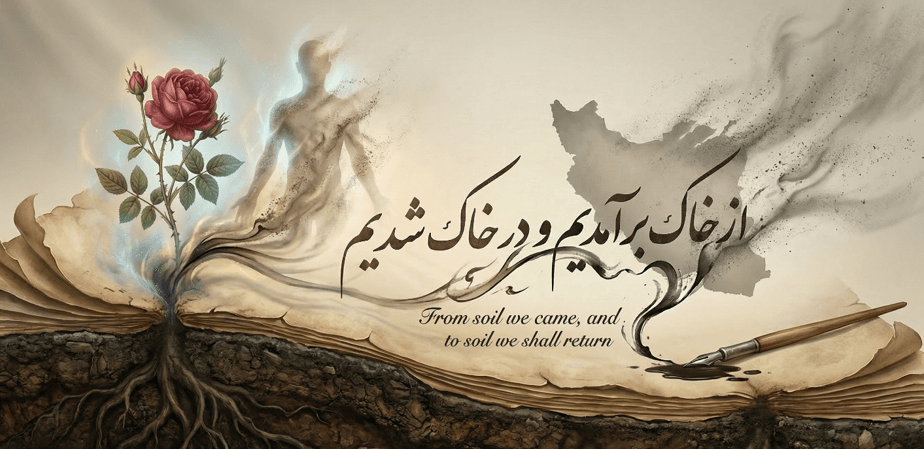
Scientific reports tell us that our soil is dying, but charts and numbers often fail to explain the deep emotional connection between people and the land. To truly protect our environment, we believe we must understand the “soul” of the soil—the cultural values and feelings people attach to the ground beneath their feet.
In our research, we looked to 1,200 years of Persian poetry as a living archive to see how a nation connects with its environment. We studied how the Persian word for soil, khāk, changed in meaning from the 3rd to the 14th century of the Solar Hijri calendar. By analyzing the works of 49 influential poets, we identified ten primary ways poets described soil:
- Death and mourning (the most frequent meaning);
- Natural body and source of plant growth;
- Humility and modesty;
- Land or ground;
- A worthless entity;
- The clay of human creation;
- Expression of servitude or submission;
- Dust;
- Collyrium (a healing eye medicine used as a metaphor for love);
- The mortal world.
Our analysis showed that while viewing soil as the “place of death” was dominant, there was a fascinating balance between physical and ethical meanings. Poets described soil as a “source of life” and a symbol of “humility” with equal frequency. This suggests that in Persian culture, the physical value of soil is inseparable from moral values. We also found that over time, the focus shifted from spiritual and religious meanings to themes of national identity and social criticism.
These findings matter for the future of our planet. Conservation efforts often fail because they rely only on technical facts. Our work suggests that to encourage people to care for the land, policymakers must speak to these cultural values. Framing soil conservation as preserving a spiritual ancestor or national heritage is more likely to inspire real action.

