By Sophia Winkler-Schor, Heather D. Craska,Marin E. Skidmore, and Chloe B. Wardropper
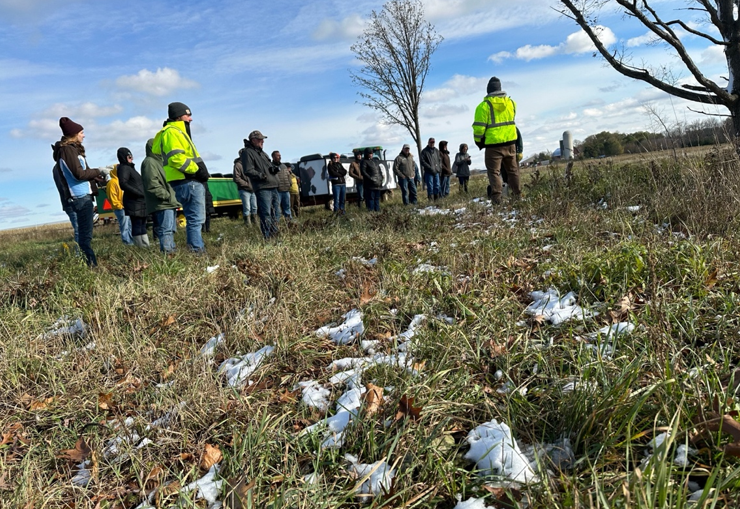
Photo caption: Farmers learning about conservation agricultural practices at a farm tour led by a demo farm leader in the Wisconsin Demonstration Farm Network Program.
Agriculture covers large areas of land and plays an important role in both food production and environmental conservation. Practices such as cover cropping, conservation tillage, and improved manure management can reduce soil erosion and water pollution. However, farmers have been slow to adopt these practices. Demonstration farm programs aim to encourage adoption by supporting farmers who test conservation practices on their farms and act as trusted sources of information within their communities.
We studied farmers participating in a demonstration farm program in Wisconsin, USA to understand how they share and receive conservation information. Using interviews with 45 farmers and social network analysis, we examined who farmers talk to about conservation and how these connections shape information sharing. We found that program managers were actually the most central sources of conservation information. We also found that farmers who lived closer to each other, or within the same program region, were more likely to communicate about conservation practices. Finally, farmers who were more socially connected tended to have higher levels of conservation practice adoption.
Our findings suggest that conservation programs could become more effective by considering existing social networks and geographic relationships when selecting demonstration leaders and designing outreach strategies.

