By Jennifer M. Holzer, Andrew N. Kadykalo, Elson Ian Nyl Ebreo Galang, Anna Pieper, Nicole Klenk, Mark L. Mallory, Alana Westwood, Bonnie M. Hamilton, Catherine M. Dieleman, Poliana Mendes, Nicolas D. Brunet, Stephan Schott, Chad Walker, Karen F. Beazley, Lori Bradford, Steven J. Cooke, Marianne Falardeau, Vivian M. Nguyen, and Jennifer Provencher
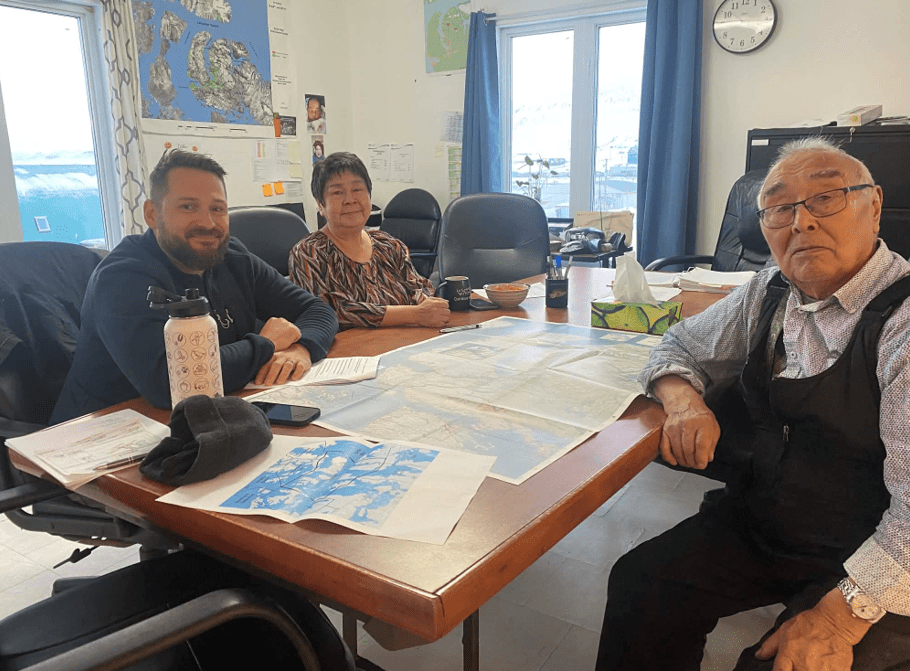
Photo credit: Andrew Kadykalo (photo by Sheena Shappa)
There has been significant momentum in recent years toward environmental researchers working collaboratively with stakeholders, rightsholders, and local communities in the research process. Their motivations are varied – sometimes to gain buy-in for the research, to acquire local knowledge, or to increase the relevance and actionability of the work – or, often, all of the above. However, because this type of work requires understanding of place-based context and cultivating trustful relationships with collaborators, it necessitates additional time and effort, beyond what is required for conventional research. Therefore, emerging scholars who wish to conduct this type of engaged research are at a disadvantage, as there are often few academic incentives, with limited additional time, or training to support the diverse skill set required. To begin to address the need for training emerging scholars for engaged research, we surveyed academics experienced in engaged research and synthesized their responses to consolidate this practical wisdom.
Using a survey of 61 experienced researchers who have led engaged environmental research in Canada, we asked how researchers initiate this type of work and the nature of their collaborations. Collaborations varied depending on the project, the place, and the people involved, but universally required that the initiating researchers do their homework, develop plans with partners over time, and that they use the principle of trust and reciprocity to guide their work. We summarize the study’s insights in the following categories to guide self-reflection prior to starting an engaged research project: clarify motivations and scope; understand context and partners; consider relationship-building; design for meaningful engagement; navigate power and ethics; anticipate challenges; and define success. Finally, we conclude by recommending that emerging scholars find mentors and listen to their stories to learn about their experiences and learn from past mistakes. Suggested next steps include creating opportunities for mentors to receive training in mentorship as well as conducting both a systematic review and in-depth qualitative analysis to understand what makes engaged research successful – at a global scale.

