By Conor Waldock, Van Thi Hai Nguyen, Margaret Awuor Owuor, Anna Samwel Manyanza, and Ole Seehausen
Life on earth is under increasing pressure from habitat destruction, over-exploitation and climate change. To address the ongoing biodiversity crisis, world governments have agreed to protect 30% of the world’s oceans and land area by 2030, under the Kunming-Montreal Global Biodiversity Framework. These agreements sit alongside broader United Nations sustainable development commitments, which aim to tackle biodiversity loss and global poverty at the same time, operating on the assumption that protecting nature and improving human wellbeing go hand in hand.
However well-intentioned global and multi-lateral processes are, our work suggests that without confronting the colonial interlinkage between biological diversity and poverty, global policy initiatives may reinforce values which slow progress towards the deeper notions of sustainability our planet deserves.
Across the world, the countries richest in wildlife and natural ecosystem diversity are often among the poorest economically. This seems puzzling, because we know that healthy ecosystems provide benefits to society. From this perspective, one might expect the most economically prosperous countries to be those with the greatest biological riches. This apparent paradox has been noted before, economists describe a so-called “resource curse” in which nations rich in natural wealth nonetheless struggle economically.
We assessed global biodiversity and economic data alongside historical records of colonisation to further examine this apparent paradox. We found that the regions colonial powers most targeted were often those richest in biodiversity. In pre-colonial times, tropical and sub-tropical regions were historically prosperous compared with European countries, aligning with the concept that biological diversity supports prosperity. Colonial powers violently extracted plants and animals, enslaved people, and stole agricultural knowledge and land from these biodiverse regions for centuries. This eventually led to local economies that colonists forcibly structured around the export of raw natural resources rather than technologically diverse and advanced economies. The institutions and governance systems left behind after colonisation ended were often weak and extractive — and their effects appear to persist to this day.
In other words, biodiversity didn’t cause poverty. But it did make a region more likely to be colonised, and colonisation drove the structure of poverty we see today. When we accounted for this historical pathway statistically, we found no direct relationship between a country’s biodiversity and its wealth — positive or negative. The link between biodiversity and poverty runs through history. This remains relevant today as global sustainability agendas organize around solutions that interweave biodiversity conservation and poverty alleviation.
In this context of colonial structures of biodiversity and poverty, we found something troubling about protected area distribution globally whereby poorer but biodiverse nations shoulder a disproportionate burden of global conservation efforts.
Taken together, our findings support what we call the “systemic bio-inequity” hypothesis — the idea that the poverty we see in biodiverse countries today is not an accident of nature, but an outcome of centuries of unequal exploitation of the ecology in colonized countries. Our framework aligns with concepts including ecologically unequal exchange — the idea that global trade systematically shifts environmental costs onto poorer nations — and critiques of green colonialism, whereby conservation itself can replicate colonial power structures. Telling these same countries that their path out of poverty lies in conserving their nature, without acknowledging or addressing that history, risks repeating old patterns under a new name.
We argue that conservation needs a fundamental rethink. Recognizing the colonial roots of today’s biodiversity-poverty paradox isn’t just an academic exercise — it should change who makes conservation decisions, who funds them, and who benefits. A fairer, more honest approach to protecting the natural world must start by confronting this history head-on.
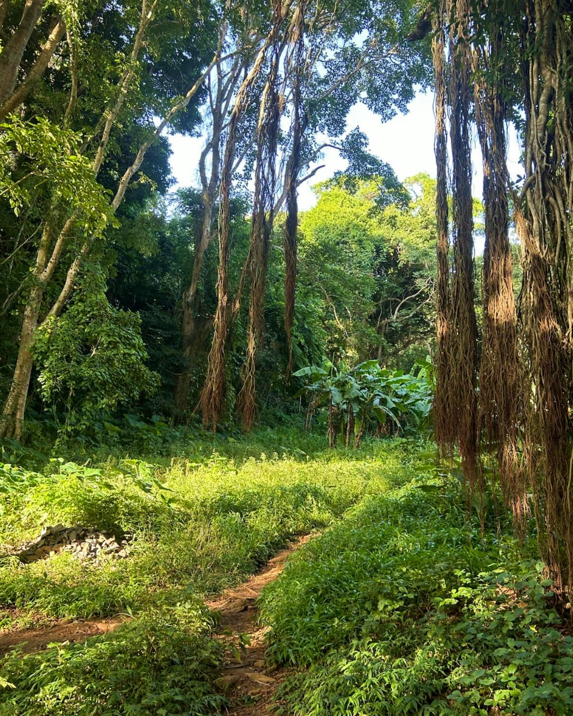
A historically viable agroforestry mixture of shade-grown coffee and subsistence farming existed and supported not only local biodiversity and the livelihood of Anna Manyanza Samwel’s grandparents (an author of the published work). Now at this site, only subsistence farming persists due to economic change – imposed privatization by international financial bodies – in the 1980s leading to reduced coffee prices and cash-crop farming livelihood becoming unviable. Today, the lack of economic opportunities leads to the rural-young seeking opportunities for wage labour in nearby towns. This economic side-effect of market deregulation impacted the socio-ecological system of coffee as a cash-crop but benefited access to cheap coffee in industrial nations leading to what’s termed “ecologically unequal exchange” – where the environmental and social costs of an economic system are born disproportionately in the global South. Our work highlights that this inequitable system, enforced during colonialism, has lived impacts today, and finds that the global distribution of natural resources and their exploitation by colonist kick-started this process of bio-inequity.
 Relational Thinking