By William M Adams
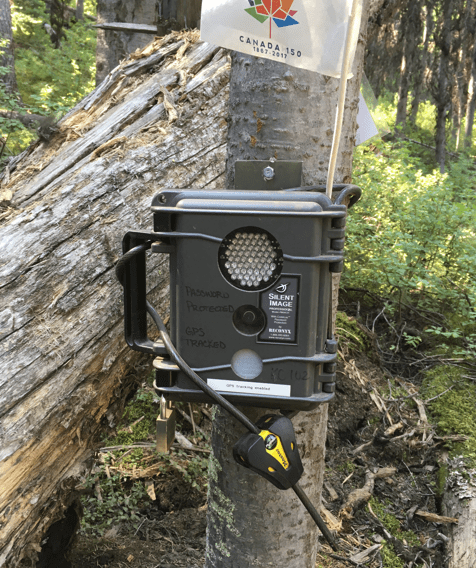
Caption: Digital trail cameras (camera traps) have become an important way to survey hard-to-see wildlife in environments such as forests. But they are also used to observe people, who may be law-abiding trail users (as here), ill-intentioned poachers, or innocent local people who find their legitimate use of the trail prevented by forest guards, or who are victimised as a result of misuse of the images.
Can digital technologies help us manage nature better? In the era of ubiquitous mobile phones, digital surveillance, drones and AI, the answer might be obvious. And, yes, there are numerous examples of people applying digital technologies to nature recovery. These technologies can, for example, generate novel data on where migrating birds go, detect cryptic or nocturnal species, automate data collection particularly making observations beyond human capacity, or capture the observations of citizen scientists.
However, the use of digital surveillance also has other implications for nature, and our relationship to it. Digitalisation can shape the way we understand the non-human, and blur the boundaries between actual nature and digital or virtual natures. Digital surveillance devices also have implications for the future of people as naturalists and field scientists. They can turn nature into a commodity, and encourage close dependence by conservationists on powerful global tech corporations. Digital surveillance for nature recovery can also reveal what people are doing, and while this can be useful in conservation, it has the same potential as any other kind of surveillance to facilitate abuse of human rights. It is also an issue that digital surveillance has the same negative environmental impacts as other forms of digitalisation, with its dependence on rare earth mining, its boundless energy demands and the problem of e-waste. Another issue is that some forms of digital surveillance, for example using electronic tags attached to the bodies of animals, has implications for their welfare.
In this paper, I conclude that digital surveillance technologies can make important scientific contributions to nature recovery, but they are not a magic bullet. We need to do digital surveillance with great care. Close attention to ethical frameworks and transparency about methods are important if their benefits are to be realised without associated costs.

