By McNamara, J, Tchignoumba, L, Koumba, G, Guissouegou, G and Feistner, A
We wanted to understand how growth of industrial development and extractive industries, like oil production or mining, affects both wildlife and the way people use natural resources. Our research focused on Gamba, a small town in southwestern Gabon that was built around oil production more than 50 years ago. Gamba sits in one of the most biodiverse areas in the world, surrounded by national parks and wetlands that are home to elephants, gorillas, chimpanzees, and rare aquatic species such as manatees and leatherback turtles. It is an important place for biodiversity, but also an important example of extractive industries impact on hunting and consumption of wildlife because the oil industry has been in operation for so long. In many places, when industries move in, they bring roads, workers, and new markets that can increase hunting and the trade in wild meat, often with devastating consequences for wildlife.
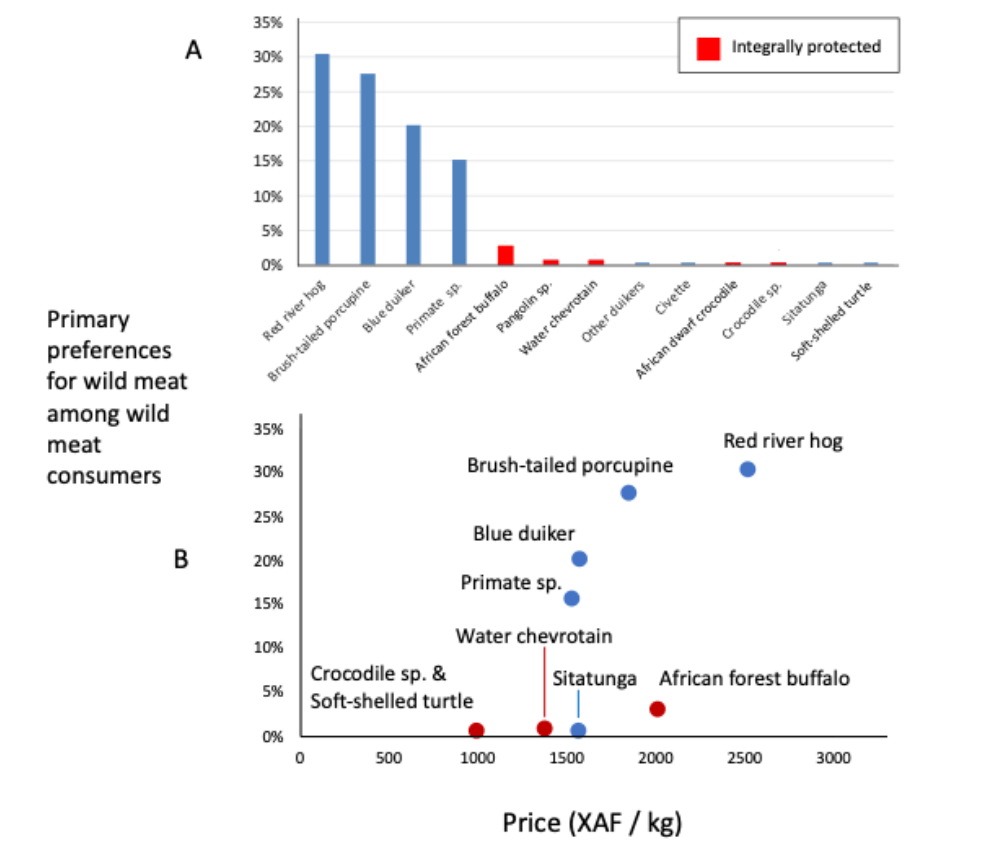
Earlier research from the late 1990s found that Gamba’s wild meat markets included many endangered species. But no one has studied wild meat trade since. To update this picture, we interviewed 145 adults in Gamba to understand the types of animal protein they were eating. We looked at fish, wild meat, and livestock, including imported frozen poultry. We also explored whether people were targeting certain species and whether factors like age influenced what people chose to eat. We found that fish was by far the most common protein in people’s diets, followed by imported chicken. Wild meat was eaten much less often than expected, and there was no sign that people were especially targeting endangered species. However, younger people did tend to eat wild meat a bit more often, which could be a risk for the future.
These results show that good supplies of fish and domestic meat can reduce pressure on wildlife. They also suggest that development of extractive industries doesn’t have to come at a high cost for biodiversity, especially when companies follow strict environmental standards and local rules are enforced. If these successes are to continue in Gamba, and the region more broadly, the maintenance of strong conservation policies aligned with sustainable fisheries and wildlife management is essential.

