By Rafael Zinnenlauf, Annina H. Michel, Norman Backhaus, and Anna Deplazes-Zemp
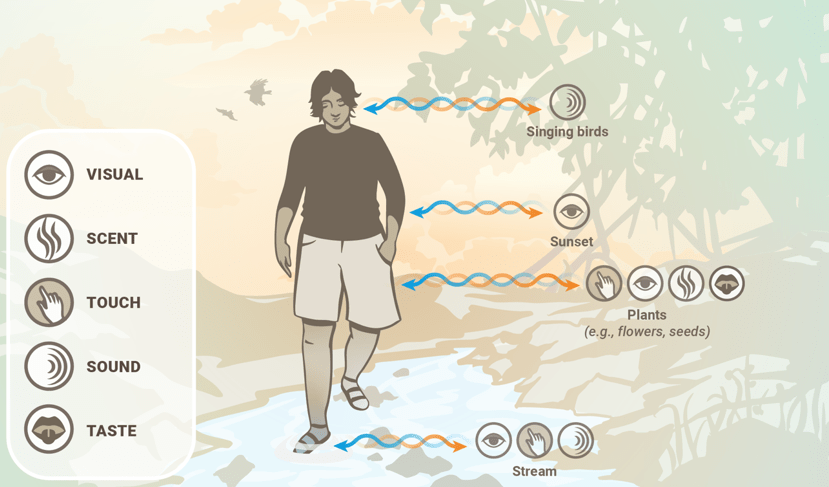
Sensing the beauty of nature, such as the colours of a sunset or the melodious song of a bird, can create what we call an aesthetic experience. Environmental aesthetics explains that these moments arise when people actively engage with nature through their senses and value nature in these interactions.
When talking about the values of nature, three main categories are often used:
- Instrumental values: natural things are valuable because they are useful.
- Intrinsic values: natural things have value on their own.
- Relational values: value that comes from meaningful relationships between people and natural things.
In this study, we explore the connection between aesthetic and relational values. Building on the work of environmental aestheticist Emily Brady, we explore how people value natural things in aesthetic experiences.
Our analysis is based on go-along interviews, which are interviews conducted during a walk. On these interviews, participants showed and explained how they perceive nature with all their different senses. In these encounters, they paid attention to nature, treated it with respect and found joy and meaning in these moments. According to Emily Brady, this is typical for aesthetic experiences, in which nature holds aesthetic value for people. We describe these experiences as forms of human–nature relationships and conclude that aesthetic values can be categorised as relational values.
Aesthetic values can teach us a great deal about relational values in general. For example we found that imagination plays an important role in aesthetic experiences and may be relevant for other relational values as well. Another interesting feature of aesthetic values is that they can be shown and explained to others, which also seems to be true for relational values more broadly.
Understanding aesthetic value as a relational value could thus help us communicate values within and between societies, better understand different perspectives, and find common ground.

