By Dechen Lham, Dominik M. Behr, Stefan Sommer, Gabriele Cozzi, and Arpat Ozgul
Why people’s opinions matter for snow leopard conservation
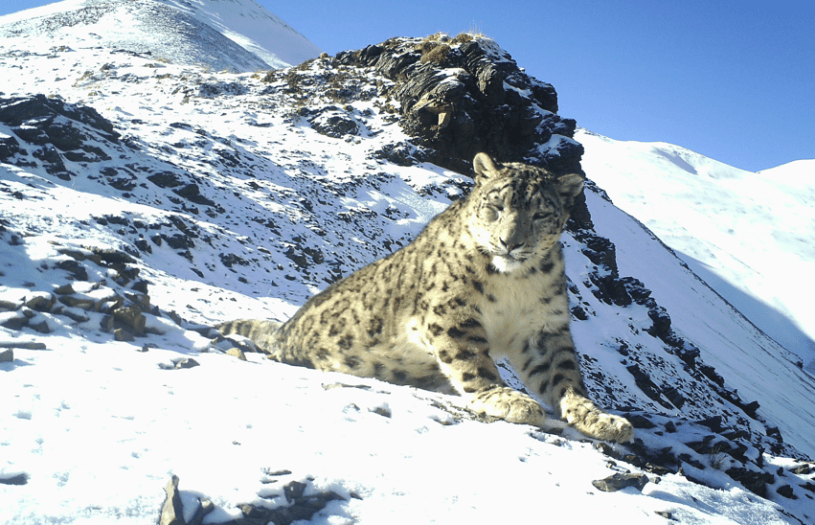
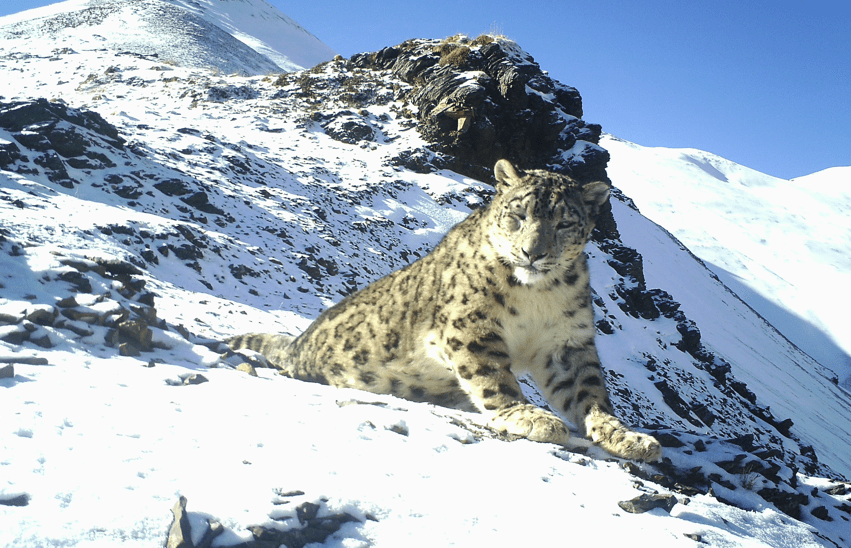
In Bhutan, public acceptance of the snow leopard is high despite snow leopards occasionally killing livestock. Understanding the factors that promote this acceptance in the face of human–leopard conflict is important to ensure peaceful coexistence and thus secure both the people’s livelihoods and the snow leopard’s persistence.
When conservationists assess the survival chances of a species in a region, they usually evaluate which aspects of the environment are favourable or unfavourable for the species but neglect people’s attitudes towards the species. Such neglect can lead to false conclusions and thus misguide conservation efforts. The risk of implementing misguided conservation policies is particularly high for large predators that occasionally kill livestock, such as snow leopards, because livestock owners may retaliate after a loss.
From an earlier study in Bhutan, we know snow leopards occur where their main wild prey, the blue sheep, is abundant and the terrain is steep. We also know that terrain overlaps with grazing grounds of yak, the predominant livestock species in the region, and that snow leopards occasionally kill yaks. Despite these occasional killings, to date, nobody has observed yak ranchers retaliating.
In our new study, based on in-person interviews, we assess the attitudes of the Bhutanese people towards the snow leopard and identify the factors that shape these attitudes. We find that acceptance of the species is high, as only 100 out of 835 interviewees (12%) had a negative attitude, but even among those 100, there was interest in the snow leopard. Of these 100 people, the majority owned livestock, had suffered livestock losses, and were unaware of both the government’s livestock insurance scheme and the fine imposed for killing snow leopards. Moreover, all people with a negative attitude lived in protected areas, three-fourths had no formal education, and two-thirds were women.
By combining the findings on snow leopard acceptance with the results on snow leopard occurrence, we are now able to identify hotspots for potential conflicts between people and the predator and can target conservation measures at those regions and demographic groups where such measures are needed the most.

