By Westfield, J. P., Wandrag E. M. and Stringer L. C.
This research is about understanding how stakeholders perceive weeds and how this impacts their land management decisions. Knowing why land stakeholders manage weeds in a particular way is important as we look to make land management processes more sustainable. This links our research to bigger picture debates on food and resource scarcity and climate change.
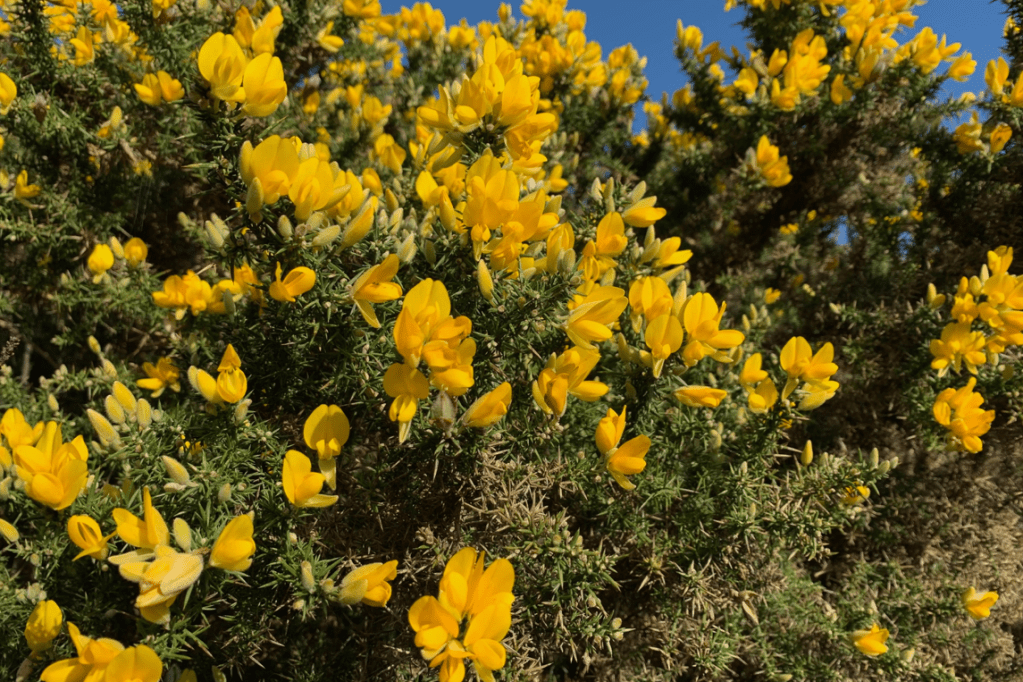
We used a case study species called ‘gorse’ (Fig. 1). Gorse is a bushy, yellow-petaled plant that people can find across the world. It is native to western Europe and has been introduced to many places, including Australia. In the UK, people once used gorse as a fuelwood and animal feed. But, worldwide, it now causes problems for land managers, particularly farmers.
To understand how land management stakeholders perceive gorse, we spoke to people 22 people from the UK and 30 people from Australia. These included individual farmers and government departments. We considered how their perceptions of gorse – whether positive, neutral or negative – linked to different environmental, economic and social values. We then looked at how each land stakeholder managed the gorse on their land – whether through burning, cutting, grazing, herbicides or other ways.
We found that that land managers in Australia all held negative perceptions of gorse. They mostly managed it through burning, cutting and herbicide. The colonial introduction of gorse to Australia meant it is a politically important species that people view negatively because of its introduction. In the UK, land managers held mostly neutral or positive views and managed it on a smaller scale through grazing or burning. A lack of funding for weed management means land stakeholders use burning because it is cheap.
In both the UK and Australia, there is a need for more environmentally friendly and sustainable gorse management to be more environmentally friendly and sustainable. We outline the ways that decision-makers could engage with land managers to encourage them to manage gorse in sustainable ways. The next steps will be to consider how to implement these sustainable solutions.

