By Petra Lindemann-Matthies, Theresa Gellesch, and Diethart Matthies
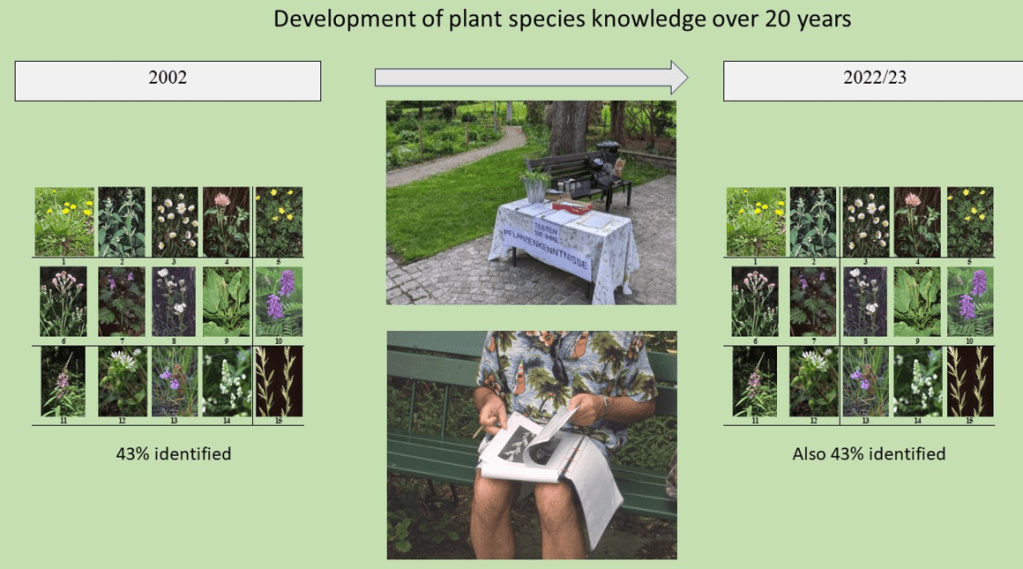
There is concern that people in western countries have lost a lot of plant species knowledge in recent decades. However, without regular studies that follow the same methods, we cannot say for sure if this knowledge has actually declined. We wanted to fill that gap by repeating a study on plant knowledge 20 years later. Adults were asked to identify 15 common wild plants in Germany, shown in photos.
The first study was done in 2002 in the city of Marburg, and the second one was carried out in 2022/23 in Marburg and Freiburg. A total of 1,558 people between the ages of 18 and 88 took part. On average, participants correctly identified 6.5 plants. There was no decline in plant species knowledge between 2002 and 2022/23.
People were best at identifying plants with attractive flowers or those that can be harmful to humans. In contrast, plants with less noticeable flowers, even though they are just as common, were the least known. This bias can lead to an underestimation of plant diversity. Knowledge increased with age and the number of sources of information people used, and women tended to know more than men. Older participants were more likely to say they learned about plants through gardening or other hobbies, while younger people were more likely to mention family and school. While there was no clear decline in plant knowledge, people still had trouble identifying plants — only about 40% of the species were correctly identified on average. This suggests that many people are becoming disconnected from nature, which could make it harder to get support for protecting biodiversity. Therefore, policies should encourage people to interact with plants from an early age to improve understanding of biodiversity. Providing more natural spaces, especially in cities, could be a possible approach. Increasing interaction with nature not only improves knowledge about biodiversity but also has positive effects on people’s mental, physical, and social well-being.

