By Amber Cowans, Darragh Hare, Xavier Lambin, Kenny Kortland, and Chris Sutherland
As more people head outdoors to hike, cycle, and birdwatch, the places where wildlife live and where people recreate increasingly overlap. We know that outdoor recreation can disturb wildlife, causing animals to change when they feed or avoid areas altogether. But the relationship between people and nature runs in both directions. How wildlife responds to recreation can shape how people feel about the natural world and whether they support efforts to protect it. Knowing that recreation is “bad for wildlife” in general isn’t enough, and existing approaches lack the detail needed to link specific human behaviours to specific wildlife responses.
We developed a new way of thinking about this problem by combining two existing ideas. The first is that animals make decisions about where to live at different scales, from choosing a broad region to live in, all the way down to deciding exactly where to forage on a given morning. The second idea is that people also make nested decisions about recreation, from choosing which national park to visit, down to whether to let their dog off the lead on a particular trail. By mapping these two sets of decisions alongside each other, we can ask much more precise questions. For instance, does building a new car park that increases forest access change where animals establish their territories? Does morning dog-walking on a specific trail stop birds from mating nearby?
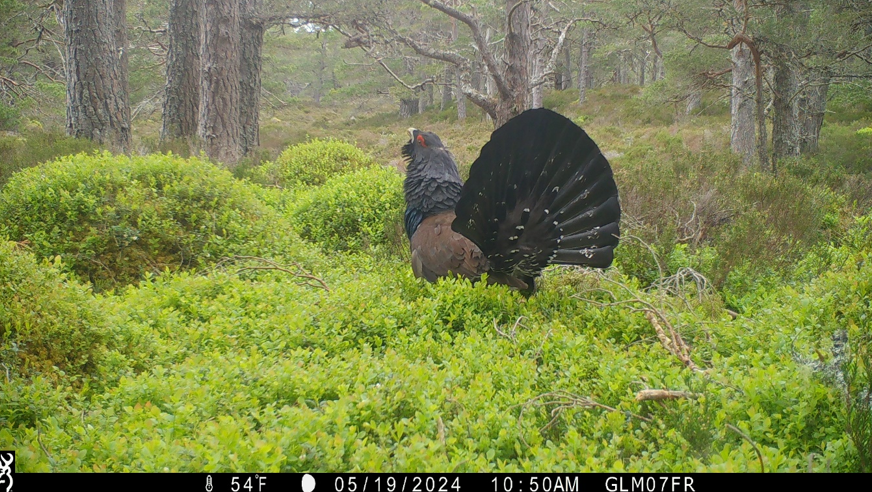
We illustrated this using the capercaillie, a large, rare forest bird in the Scottish Highlands, to show how different types of management, from national tourism policy down to trail signage, might connect to different wildlife responses. Our framework helps managers move away from blanket access restrictions, which can damage public trust, toward more targeted and proportionate approaches. Rather than closing entire forests, managers can identify which specific behaviours, in which specific places, are causing the most harm while also considering how encounters with wildlife, or the loss of them, shape people’s connection to nature and support for conservation. We hope this way of thinking can be applied to wildlife and recreation conflicts in natural areas around the world.

