Read the full paper here – Supporting interventions to lessen human–wildlife conflict
By Douglas Sheil
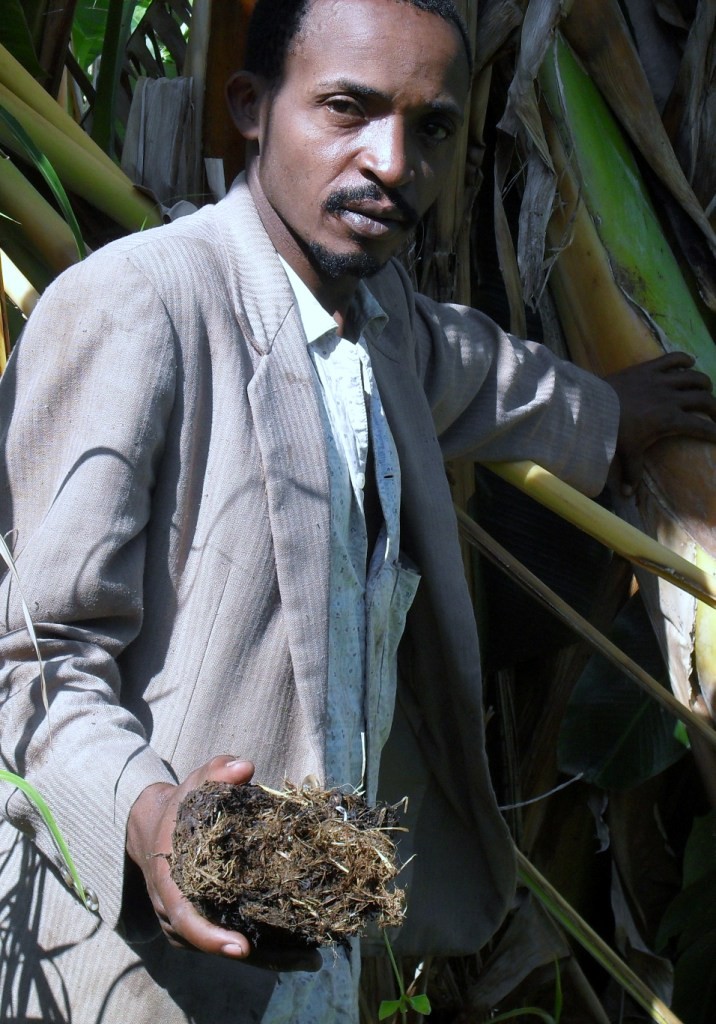
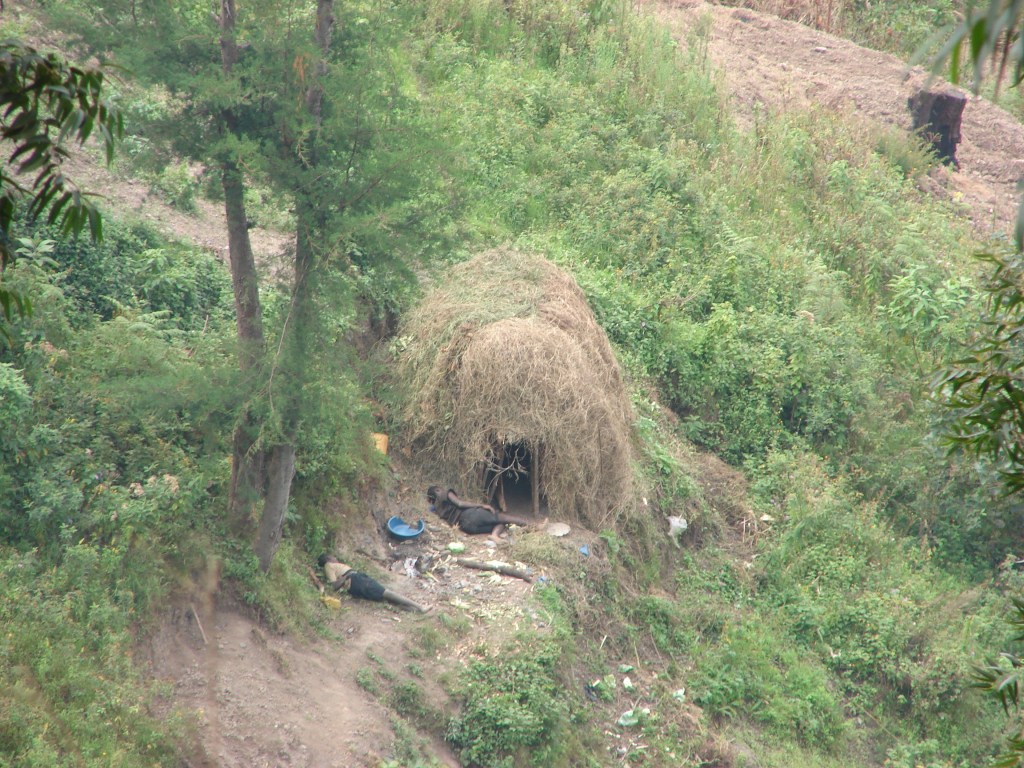
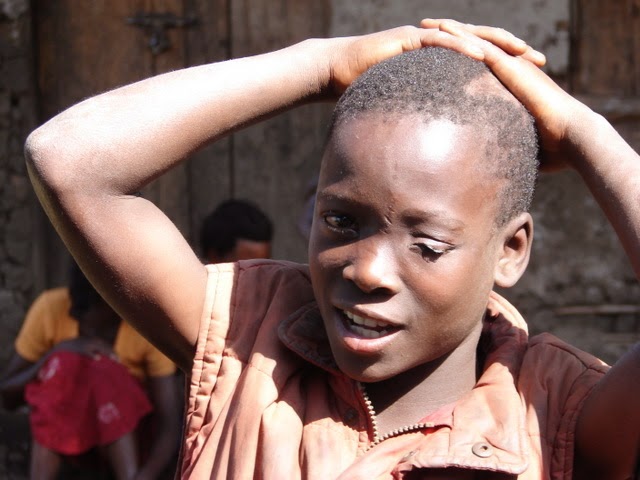
When I became director of the Institute of Tropical Forest Conservation at Bwindi Impenetrable National Park, Uganda, in 2008, every conversation with local farmers seemed to turn to the same issue: wildlife destroying crops, killing livestock and injuring people. Many were angry and wanted us to see why. One farmer shook elephant dung at us and wanted us to take pictures so we could see how animals had ruined their fields (see Figure 1). Children were staying up all night guarding crops (Figure 2) and missing school. People were also being seriously hurt. The same farmer who had shown us his fields insisted I take pictures of a boy scarred by a hyena bite received after falling asleep while guarding the fields (Figure 3).
At the same time, agencies were rolling out their projects—trenches, thorn hedges, fences and “alternative income” schemes—and claiming success. Between 2008 and 2018, Uganda recorded over 17,000 wildlife conflict incidents. Around 50 people are killed by wildlife every year: most of them near protected areas. One 36-year-old man living inside Queen Elizabeth National Park described his situation: “We are like prisoners in our own villages. We cannot walk freely, and we must be inside by 7 pm. Even fetching water is dangerous due to crocodiles… “
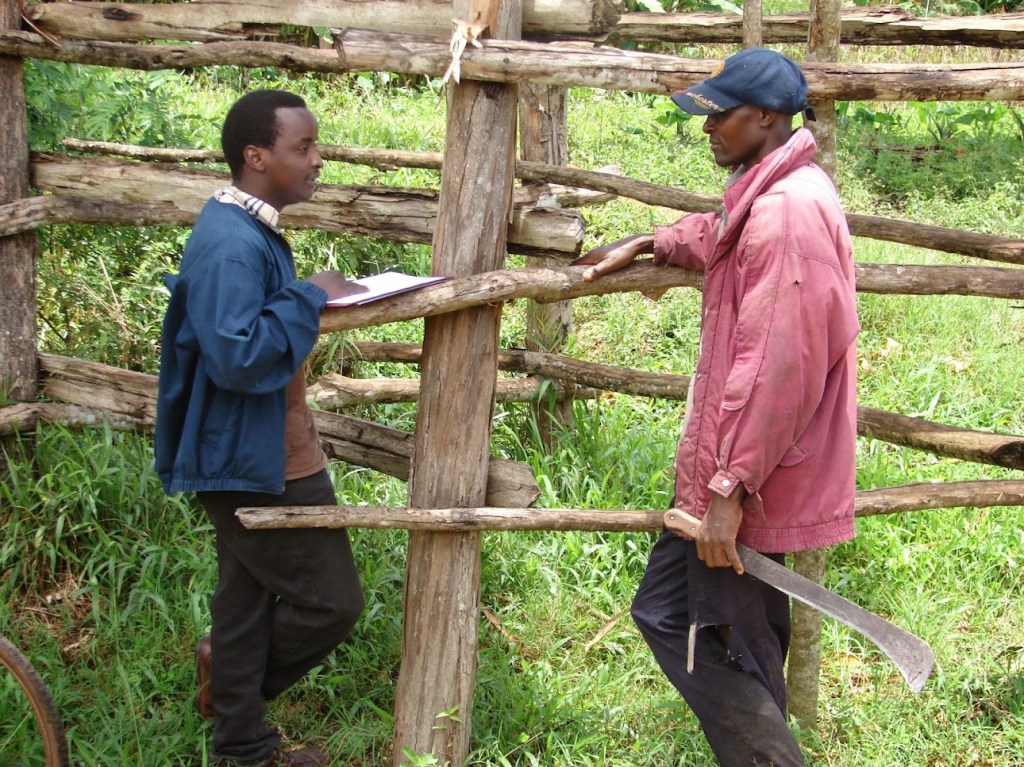
I wanted to understand why so many projects seemed to be deepening local frustration rather than solving it. I recruited and worked with Emmanuel Akampurira to generate answers to this question. Later, Emmanuel incorporated this question into his PhD research, and we continued searching for answers together. We hoped to find success stories to learn from. When those proved elusive, we kept looking, further, wider and deeper. Our search took more than a decade, six protected areas, and 758 formal one-to-one interviews with local people (Figure 4). There were many additional meetings and discussions with local agencies, government officials and wildlife staff to try and reconcile what we learned.
What we found was uncomfortable. Around two-thirds of the local people we spoke to expressed distrust, even hostility, towards the agencies running projects to address human-wildlife conflicts. And the agencies themselves were often seen as part of the problem: organisations routinely promoted their (often short-lived) successes and buried their failures, making it nearly impossible to learn what does and doesn’t work. That’s why we went directly to the people most affected to see what they could tell us.
There were stories of hope, of betrayal and of neglect. One project promoted lemongrass and Artemesia as alternative income crops for farmers around Bwindi, only to learn that there was no viable local market. Farmers who had invested their time, land and labour to grow the crop felt misled and cheated. Another project building a section of stone wall around Mgahinga to keep buffalo in the park, used outside labourers rather than local people, who had expected the work. Angered at being bypassed, locals refused to maintain it. The wall soon became useless. Another apparently sound technical solution, destroyed by poor planning and careless decisions.
Sometimes the anger and perceived injustice motivated more active undermining. In one village in Queen Elizabeth National Park, after solar-powered lamps failed to stop cattle losses, residents destroyed the equipment in a fit of anger. We saw trenches filled in, fences broken, hedges uprooted. These weren’t random acts of vandalism — they were coordinated community responses that sent a clear message about failed promises. And they signal something deeper: marginalised communities using the only lever available to them.
Our paper, just published in People and Nature, examines why well-intentioned projects fall short, and what it takes to do better.
While fixes are often technically sound when viewed in the abstract, that is insufficient for success. The deeper problem is that the people expected to maintain these projects—and even to be grateful for them—feel ignored, bypassed, or simply abandoned when donor funding runs out. Trust, once broken, is hard to rebuild. And interventions imposed from outside, however well designed, generally fail to gain local ownership. Communities don’t maintain what they don’t own.
We distilled eight evidence-based recommendations. The core message running through all of them: check whether communities are genuinely ready and willing before you start; be radically transparent about what you are asking of people; let locals co-design and even reject proposals; build on existing trusted institutions rather than inventing new ones; and plan for what happens after the funding ends.
We published in People and Nature because it is open-access and readable by practitioners and communities in Africa and beyond. And this is unlikely to be just an African story. Wherever people live alongside wildlife, the same dynamics are likely to apply. Get the human relationships right, and the wildlife wins too. Get them wrong, and no fence in the world will hold. If you fund, design, or run human-wildlife conflict projects—or consider doing so—please read our article.
In the end, it is those living alongside wildlife who determine whether any intervention survives. Win their trust, and conservation works. Lose it, and no fence, trench, or solar lamp will make the slightest difference.
 Relational Thinking