By Sebastian Chekunov, Adam Toomes, Phill Cassey, and Thomas Prowse
This Plain Language Summary is published in advance of the paper discussed. Please check back soon for a link to the full paper.
The exotic pet trade has expanded from physical stores, with people increasingly turning to the internet for buying and selling live animals. The international wildlife trade can benefit human livelihoods and conservation, but it can also cause negative impacts – through overexploitation, and the introduction of invasive species and zoonotic diseases. Regulation and monitoring are important to ensure the safety and sustainability of wildlife trade.
Online surveillance is increasingly used as a low-cost, time-effective alternative to physical monitoring approaches. Online monitoring can be conducted remotely, which is particularly useful as global markets become more connected and species are traded farther away from their source countries. However, without understanding the links between online and offline trade, online surveillance should not be relied upon to represent all trade.
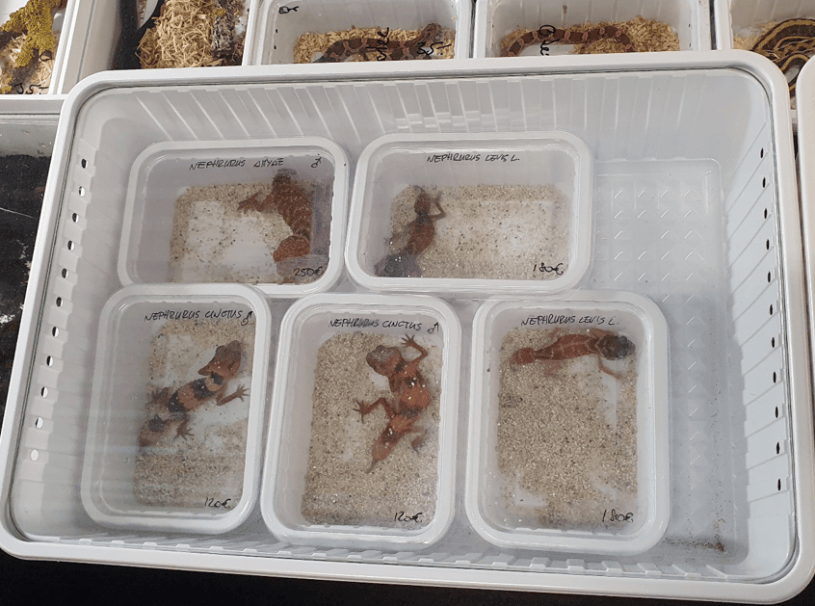
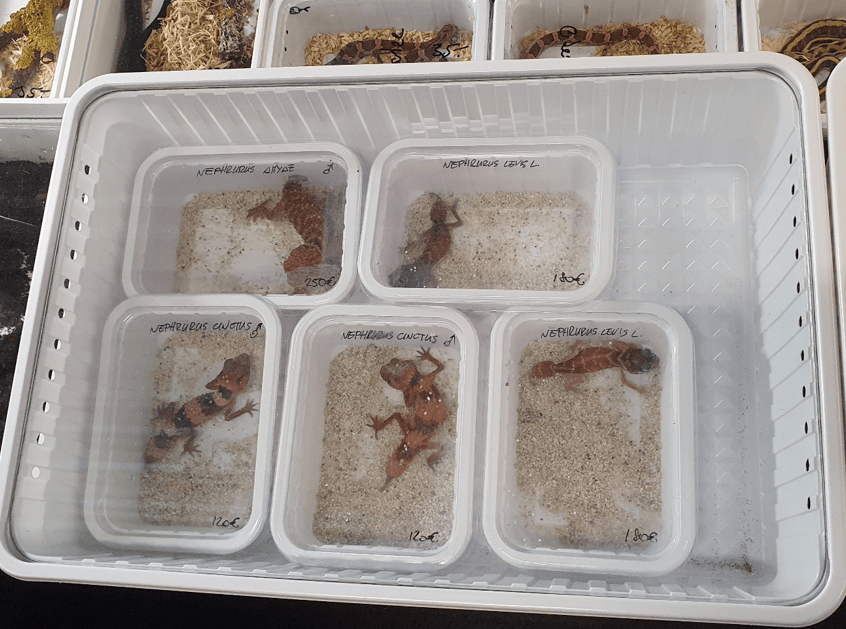
Over the past few years, amid growing concerns regarding the illegal export of native species from Australia, online surveillance has been used to gain an understanding of the international trade in Australian reptiles. To examine how well this online monitoring represents physical trade, we compared the Australian reptiles advertised online with those offered in-person at exotic animal expos in Europe. We collected online advertisements from a classified advertisements website every two days between mid-2019 and mid-2023 and surveyed three expos in mid-2023.
There was a lot of overlap between online and offline trade, with similar prices and relative abundances of most Australian reptiles. Some people who sold at expos would advertise their reptiles online prior to the events, letting customers know what would be available on the day. However, this was not a perfect representation, with some species advertised online but not in-person and vice versa. Offline trade was better represented by our entire four-year online dataset than by advertisements in the six months preceding the expos, or even advertisements that mentioned the expos themselves.
For the most accurate and comprehensive understanding of wildlife trade, we recommend an approach that incorporates both physical and online monitoring. When physical monitoring is not feasible, we recommend a long-term online monitoring approach to collect detailed information over time, rather than short-term snapshot monitoring.

