By Grace Grimes, L Jen Shaffer, and Josh Drew
This Plain Language Summary is published in advance of the paper discussed. Please check back soon for a link to the full paper.
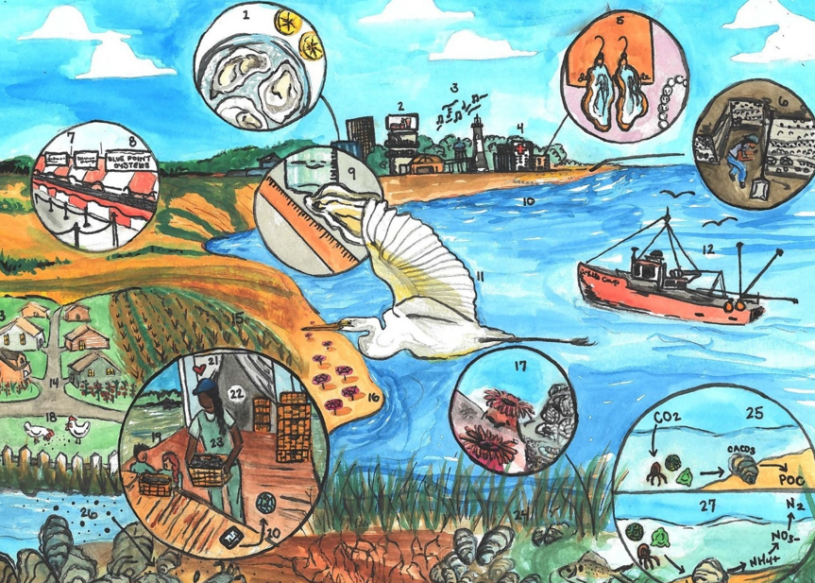
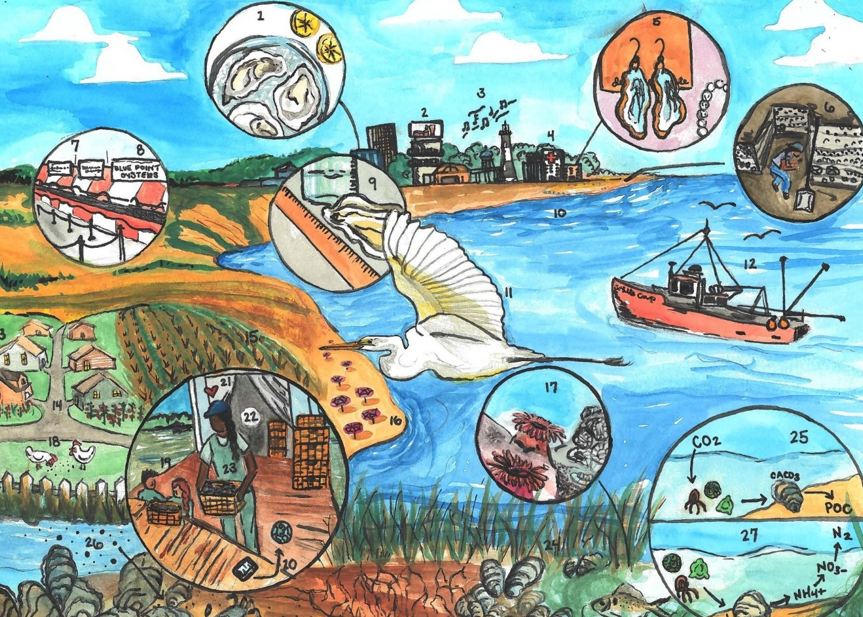
Coastal areas are places of deep ecological, economic, and cultural importance, but they are also places where many different people want different things from the same stretch of water and shoreline. On Long Island, oysters sit at the center of these tensions. They can help clean water, support jobs and local food, and contribute to restoration and climate resilience. At the same time, oysters and oyster farming can raise difficult questions about access, use, aesthetics, and management.
In this study, we worked with a wide range of people connected to oysters on Long Island, including yacht clubs, town representatives, environmental organizations, oyster farmers, artists, researchers, and others. We wanted to understand both where people disagreed and where they might share common ground. To do this, we used two approaches together. First, in small-group workshops, participants created maps showing the oyster-related benefits and concerns they found most important and how they believed these were connected. Second, participants took photographs and shared stories about what oysters and coastal places meant in their lives.
Using both approaches together helped us see not only what people valued, but also why those values mattered to them. We found that participants often differed in how they thought positive change should happen. For example, they did not always agree on the best way to improve coastal conditions. Even so, many groups shared important concerns and goals. Clean water, working waterfronts, and the future of coastal communities appeared repeatedly across the study.
Our findings suggest that conflict around oysters is not only about opposition. It is also about different experiences, relationships, and ideas about how to achieve similar goals. That matters for management. If decision-makers begin with the values people already share, they may be better able to build policies and partnerships that support collaboration, local buy-in, and more sustainable coastal futures.

