By Charlotte E. L. Whitham & Julia Leventon
This Plain Language Summary is published in advance of the paper discussed. Please check back soon for a link to the full paper.
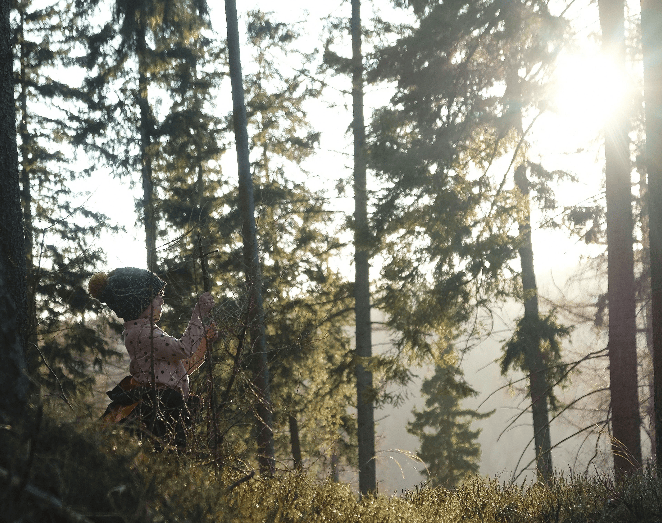
We know that connections and relationships between humans and nature are at the heart of what transformative change for sustainability requires. As a result, a lot of work in research and practice focuses on improving human-nature connection in individuals. However, in this perspectives piece, we make a case that researchers should focus more on how these connections and relationships form and develop right from the beginning of life.
We describe how the early years (the age group from birth to 7), being a formative and foundational developmental stage, could also represent a unique and foundational period for developing human-nature connections. We refer to theories and scientific literature from developmental psychology and beyond that helps support this argument. For example, we discuss how children in their early years are, for the first time, making sense of their place in the world, and so tend to look more outside of themselves than inside.
Key to this article, we also explore the significance of focusing on human-nature connection in the early years, for transformative change efforts – when a central part of transformative change is the fundamental shift in underlying views and value systems, for a just and sustainable world.
Finally, we suggest three possible directions for future research and practice:
- reframing the concept and definitions of human-nature connection within the unique early years;
- more empirical research on which factors are responsible for developing deep human-nature connection in this age-group and through which pathways do these function from one developmental stage to another;
- what understanding might people require to nurture human-nature connection development across a range of social, cultural and geographical contexts.
We argue that answering these kinds of questions has great potential for sustainability. It has potential to build children’s resilience and lasting pro-environmental values, and to unlock wider pro-environmental and sustainability transformations across society and generations. We must not miss this unique opportunity to support deep, lifelong connections with nature, right from the very beginning of life.

