By Sandra P. Ángel Moreno, Cristina Espinosa, and Zabrina Welter
This Plain Language Summary is published in advance of the paper discussed. Please check back soon for a link to the full paper.
Deforestation in the Colombian Amazon is accelerating, driven by cattle ranching, land grabbing, and illegal economies that have expanded since the 2016 peace agreement. Preventing further forest loss is one of Colombia’s most urgent environmental challenges, since deforestation is the country’s main source of carbon dioxide emissions.
One popular solution is to pay local people to keep forests standing. This reflects a broader global trend of treating forests mainly as carbon reservoirs, rather than places where people live and depend on. In Colombia, this is done through programs like Visión Amazonía (VA), which pays small farmers (campesinos) to protect forest cover. It assumes that campesinos’ practices contribute to deforestation. Yet evidence shows large landowners and illegal actors are the main drivers and beneficiaries. Guaviare, in southeastern Colombia, is one of the program’s main regions, accounting for 24% of the country’s annual deforestation. There, VA seeks to build a “forest-based economy” by assigning economic value to standing forests as an incentive to “take care” of them.
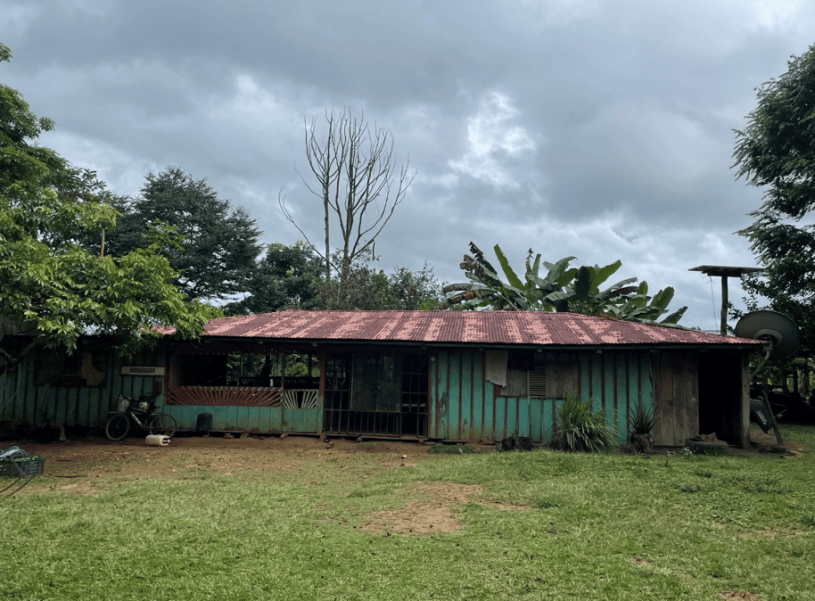
This overlooks something important: many campesino families have lived on this land for decades and have meaningful relationships with the forest. Through interviews and fieldwork with campesina women and program officers, we found people understand forests and forest care in different and conflicting ways. VA treats the forest as discrete land unit valued for storing carbon. Campesino communities, in contrast, see the forest as part of a living territory tied to their small farms (fincas), sustained through everyday, often unrecognized work: restoring soils, tending animals, protecting water sources, maintaining home gardens, and planting native trees. Much of this labor falls to women and remains invisible, to conservation programs and within their communities.
These everyday acts of care sustain more than tree cover; they nourish the conditions for life in the territory. Campesino communities are organizing collectively to protect their forests and their right to remain there, without being stigmatized as “deforesters”. This has grown into political projects like La Guardiana del Chiribiquete, through which communities assert their own ways of caring for the forests and their surroundings.
Looking at conservation programs through a care lens invites us to imagine forests not only as carbon stores, but as mosaics of life-sustaining relationships between people, animals, plants, water, and soils.

