By Tom Gammage, Georgina Gurney, Siti Arieta, Amy Diedrich, Jacqueline Lau, and Dedi Adhuri
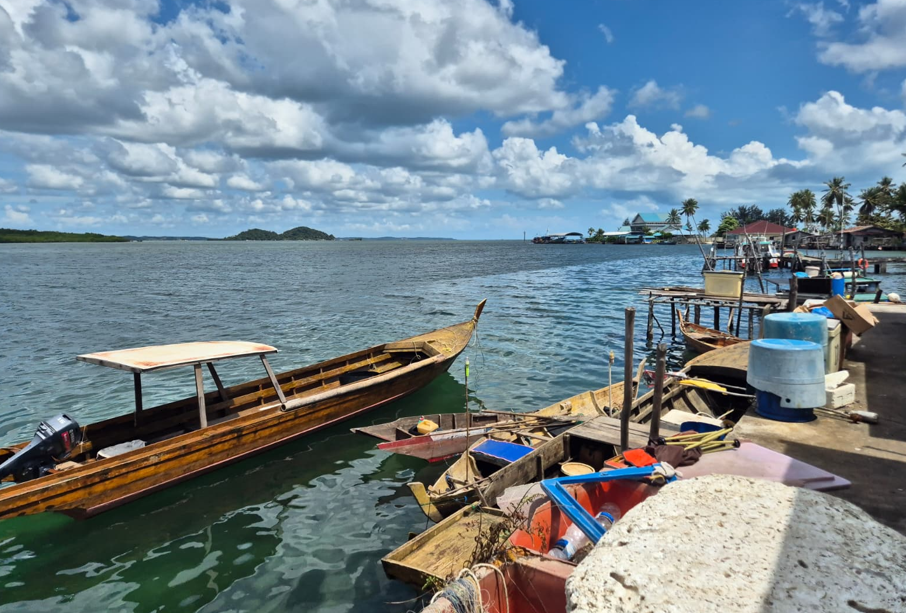
Photo: Tom Gammage, 2024.
This Plain Language Summary is published in advance of the paper discussed. Please check back soon for a link to the full paper.
Marine conservation often struggles. Not because people don’t care about conservation, but because successful conservation requires fairness and different groups quietly mean different things by “fairness.” Our research shows that when marine conservation projects overlook a community’s own sense of what is fair, support for conservation can fall apart.
Around the world, protected areas in the ocean increasingly depend on governments and coastal communities managing them together (termed ‘co-management’). Fairness is meant to sit at the heart of this arrangement. Yet “fairness” is rarely pinned down, and we suspected that the people involved might not mean the same thing when they use the word.
We worked in the coastal waters of eastern Bintan, Indonesia. We spoke with 26 residents, including small-scale fishers, women who collect shellfish along the shore, and fish farmers, and with three government officials. We also studied the official plan for the protected area. Our aim was simple: to compare what each side actually means by “fair.”
On the surface, both groups agreed. Everyone should have a say, the benefits of conservation should be shared, and the rules should be clear and openly explained. But underneath these shared words lay very different meanings. For residents, fairness was rooted within the community; from relationships, a shared dependence on the sea, and long-standing local customs about who can fish where and for what purpose. For government, fairness meant following official procedures, permits, and laws. These differences trace back to deeper gaps in power, authority, education, and history, and ultimately who gets to decide what counts as legitimate.
We found that when decisionmakers push aside a community’s understanding of fairness, people lose trust and become less willing to support conservation, weakening the very goals it is meant to achieve. As countries pledge to protect 30% of the planet by 2030, our work is a reminder that conservation which lasts must begin with local ideas of fairness, on local terms, for the good of both people and nature.

