By Alex McInturff and Michael L. McInturff
This Plain Language Summary is published in advance of the paper discussed. Please check back soon for a link to the full paper.
Around the world, large predators set off conflicts with people that seem to be hard to fix, or even explain. Whether dealing with leopards in India, brown bears in Italy, or wolves in the American West, disputes about large carnivores loom large in politics and in the public imagination. Managers and individuals alike have worked hard to resolve these conflicts using novel technologies, like electrified fences, or payments for damages. Even when these efforts are science-backed, the arguments continue anyway.
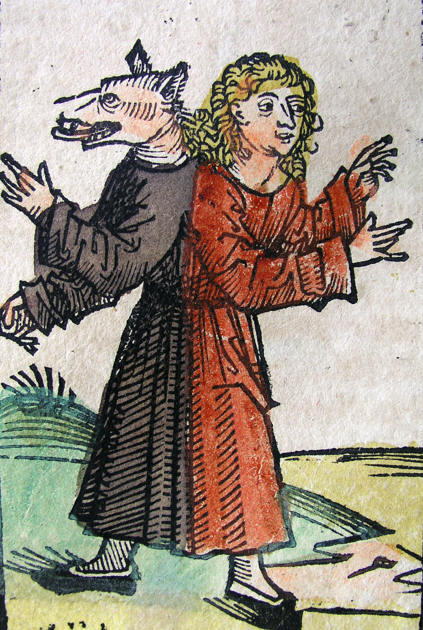
We think part of the reason is that these conflicts have deep roots that technology or even money cannot solve. In this paper we borrow an idea from literary scholarship called monster theory, which studies the creatures a society invents and what those creatures reveal about the people who invent them. According to monster theory, Dracula, Grendel, and Frankenstein’s creature are all products of a particular people and a particular time, and they can help us understand their fears and anxieties.
We argue that many people think about large carnivores as monsters, and studying this can tell us something new, and help us resolve old and stubborn arguments. We work through one case in detail, the wolf in the American West, where a cultural tradition of viewing wolves as monsters runs from scripture through fairy tales to films. When a wolf turns up in a pasture, that whole history turns up with it. Reading conflict this way helps explain why hostility often bears little relation to how much damage has occurred, why people on opposite sides come to see each other as monstrous, and why better information so rarely changes anyone’s mind.
While our focus is on wolves, every place has its own inherited stories, and they differ. What does not differ is that animals live on landscapes where people have been telling stories about them for a long time, and that wildlife management almost never takes those stories into account. We hope this essay can change that, and we offer some practical steps for doing so.

