By Amber Cowans, Darragh Hare, Xavier Lambin, Kenny Kortland, and Chris Sutherland
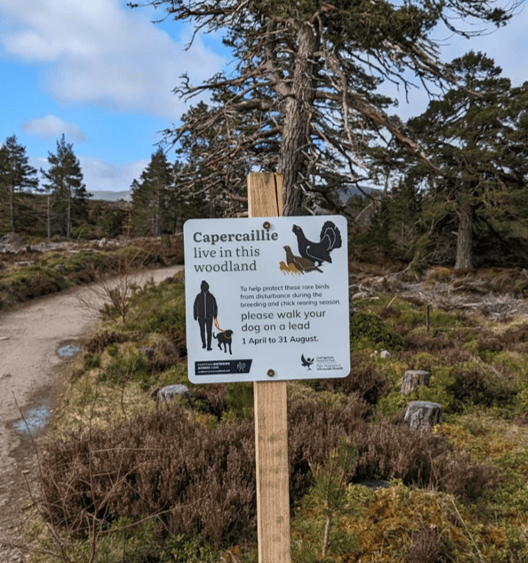
When we ask people to change how they behave in the countryside, how we make that request matters. We found that people were more willing to follow conservation requests when signs clearly explained what they should do and when the request was linked to a particular local species.
Outdoor recreation brings many benefits, helping people connect with nature. But the growing popularity of walking, cycling, wildlife watching and dog walking can also put pressure on wildlife. Signs are one of the main ways that protected areas ask visitors to reduce these impacts. But what makes a conservation request convincing?
We wanted to find out whether people respond differently depending on why they are asked to change their behaviour and how the request is presented. We surveyed 600 people online, who live in Scotland and regularly visit the countryside. We asked them how likely they would be to follow three common requests: keeping dogs on leads, staying on marked paths, and avoiding a particular area. We then varied the messages on the signs. Some explained that the request was intended to protect the endangered Western Capercaillie, some referred to protecting biodiversity more generally, and others focused on people’s own safety or the safety of their dogs. We also tested whether it was more effective to say what visitors should do, or to say what most other visitors do.
People generally reported that they would follow the requests. However, the way the requests were explained made a difference. Clear requests telling people what they should do were more effective than messages describing what other visitors supposedly do. Requests that mentioned the Western Capercaillie were also particularly effective, although this depended on people’s age. Older visitors were more responsive to the species-specific message, while younger visitors showed little difference between the different reasons given for the request.
These findings suggest that conservation messages are not simply about telling people what rules to follow. They can also shape how people understand their relationship with wildlife and their responsibilities when sharing natural landscapes. For conservation managers, using clear requests and connecting them to meaningful local species could be a simple way to encourage people to make choices that give wildlife more space, while allowing people to continue enjoying the countryside.

