By Daniel Johnson, Katja Schmidt, Charlott Scholz, Lena Chowdhury, and Alexandra Dehnhardt
Soils are easy to overlook because most of what they do happens below our feet. Yet healthy soils are essential for food production, clean water, climate regulation, biodiversity, and many other things people depend on every day. In this study, we wanted to understand how people value these soil-related benefits, and whether these values differ between countries.
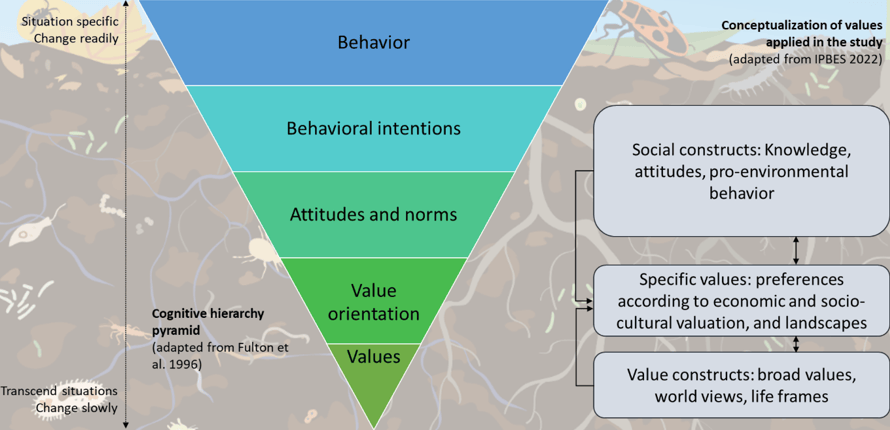
We surveyed people in Denmark, Spain, and Ireland. We asked them which soil-related benefits they considered most important, how they preferred future landscapes to look, and what kinds of soil-friendly land-use changes they would support. We also asked about their knowledge of soils, attitudes toward environmental policy, everyday environmental behavior, and broader views about the relationship between people and nature.
Our results show that people in the three countries often valued similar soil-related benefits, such as food production, water regulation, air quality, climate regulation, and maintaining options for future generations. However, the reasons behind these values differed more strongly. In other words, people may support similar soil benefits, but they do not always do so for the same reasons. Their preferences were linked in different ways to knowledge, attitudes, behavior, worldviews, and how they understand the relationship between people and nature.
This matters for soil policy. It suggests that simply giving people more information about soils may not be enough to build support for soil conservation. Policies and communication should also connect to people’s experiences, values, responsibilities, and local landscapes. Participatory approaches, such as landscape visualization, citizen science, demonstration sites, and local planning processes, can help make the importance of soils more visible and meaningful.
By combining different ways of asking about soil values, our study shows that soil conservation needs both shared goals and locally adapted approaches.

