By Emiel De Meyer, Emmanuel Emaruk, Simon Omeri, Adam Leese, Claudias N. Lorika, Thomas Achilla, Vivian Lomele, Pablo Manzano, and Rainer W. Bussmann
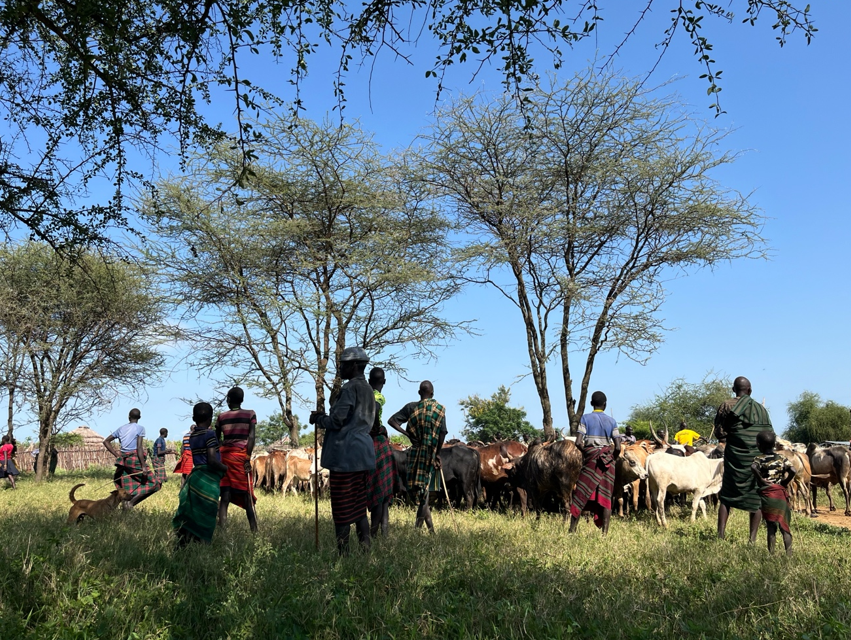
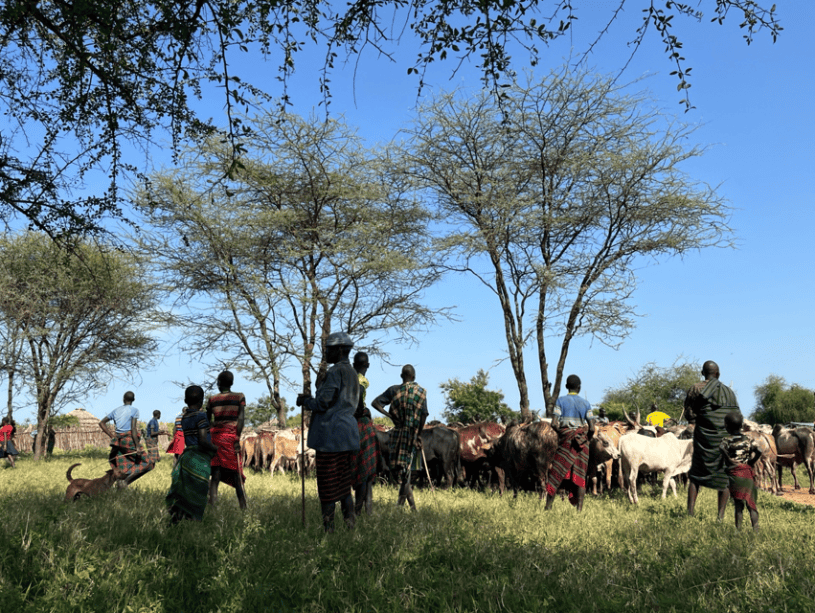
Caption: Karamojong men and their cattle near the manyatta (village)
In this study, we explored how communities use wild plants to deal with times of severe hunger. As formerly mobile pastoralist communities sedentarize in Karamoja, Uganda, we found that communities use wild plants they had not eaten before to cope with hunger shocks.
We worked with Tepeth and Karamojong communities in five villages in Uganda. Through group discussions, interviews, and field walks, we identified plant species and documented how people use them. In total, we recorded 27 plant species that people have recently started consuming. We found that these new plant uses emerged during times of severe hunger, when crops failed, livestock numbers declined, and other food sources were limited. Most of these plants grow close to homes and fields and are eaten as cooked leafy vegetables, especially during the rainy season.
People first discovered many of these plants through individual experimentation. People tested different plants by preparing and tasting small amounts to see if they were safe. Women were key innovators in this process. Once they found a plant was edible, knowledge spread within and between villages, after which the plants gradually became part of everyday diets. In some cases, plants were renamed upon their first use, reflecting who first discovered them and showing how names carry information and history.
Our findings show that wild plants act as a reservoir of resilience during times of crisis. They also show that plant use is changing as communities respond to changing conditions. Understanding and supporting these locally developed strategies is important for policy and development, as they can strengthen food security and support adaptation to change.

