By Xiaoyu Yu, Bin Wang, Liping Wang, Fei Chen, and Ahimsa Campos-Arceiz
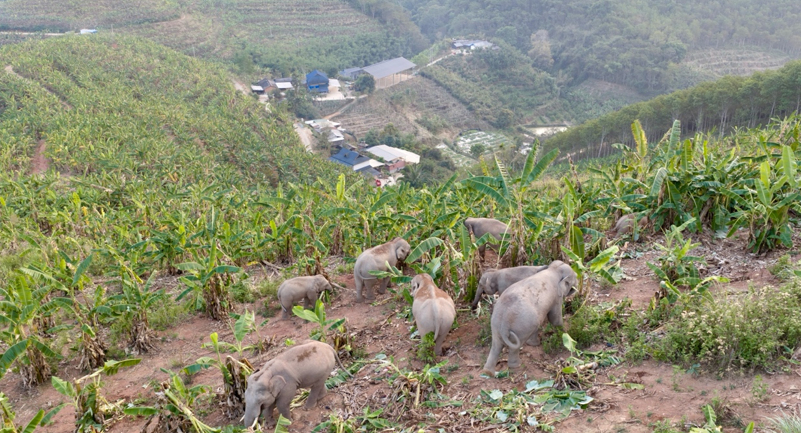
China is home to a recovering population of about 300 Asian elephants. While this is a conservation success, these giant animals often leave protected areas and roam through villages, eating crops and threatening people’s safety. For conservation to succeed long-term, local people must be willing (tolerant) to share their land with them.
To find out what drives tolerance in our study area, we interviewed 769 people across 136 villages. We spoke to people in areas with heavy elephant activity and high human-elephant conflict, as well as those in areas where elephants are rare and there is little conflict. Our results showed that tolerance is significantly lower in places where elephants are common and conflict is high. However, the reasons behind this went beyond economic loss. We found that:
• Safety comes first: Residents’ concern for their physical safety was a major factor in reducing tolerance.
• Affection matters: People who simply liked elephants or found them interesting were much more tolerant, regardless of the damage caused.
• Trust is key: Tolerance was higher when locals felt the government agencies managing the elephants were doing a good job.
In short, financial compensation alone is insufficient to foster a willingness to coexist with Asian elephants. Instead, socio-psychological factors—specifically human emotions such as fear, anxiety, and happiness, interaction frequency, and attitudes towards wildlife and local organizations—play a more important role.
These findings have important implications for China’s planned Asian Elephant National Park and for managing conflicts with large animals globally. We suggest that conservation policy must move beyond just paying for damage. To truly promote coexistence, managers need to prioritize human safety to reduce fear, build trust between local communities and conservation authorities, and foster positive engagement with wildlife, rather than treating them only as a problem needing compensation.

