By Nita Lauren, Emily M. McLeod, Sarah Kneebone, John Abiad, Yoshihisa Kashima, Liam D. G. Smith, Angela J. Dean, Georgia E. Garrard, Matthew Selinske, and Sarah Bekessy
Human behaviour is a primary driver of threats to wildlife, from habitat destruction to unsustainable consumption. Getting people to sustain habits and behaviours that protect nature over time is challenging. We wanted to know whether doing one small, accessible thing for wildlife could open the door to doing more actions for wildlife.
We found that, within a conservation-related context, pairing a simple, everyday purchase (like buying a cup of coffee) with the right kind of message can nudge people toward taking further action for nature. This matters because wildlife is under serious pressure worldwide, and finding affordable ways to grow public engagement with conservation is one of the biggest challenges facing organisations working to protect biodiversity.
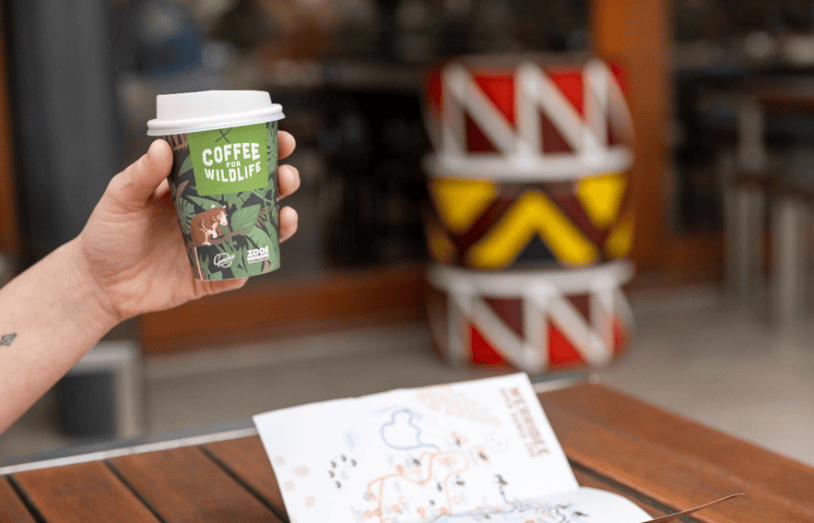
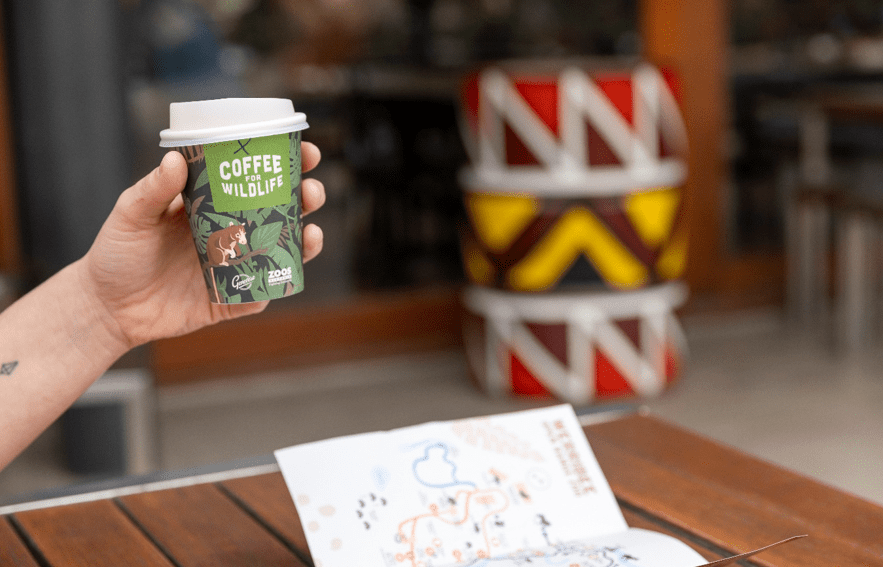
We ran our study in a café inside the Melbourne Zoo, where all the coffee they sell is wildlife-friendly, meaning it is grown in shaded forests that protect the habitats and animals that depend on them. Over several weeks, we tested three different messaging approaches with 163 café customers, using both visible signs and brief comments made to customers after they collected their coffee. Some received messages that directly named other behaviours they could do to help wildlife that were similar to buying a cup of wildlife-friendly coffee. Others were encouraged to reflect on how their everyday choices connect to nature. A third group received neutral messages with no links to other conservation actions.
Customers who received either of the targeted messages were more likely to say they would take further steps for wildlife, including buying a bag of wildlife-friendly coffee and signing up to participate in citizen science, which was a behaviour not mentioned in any of our messages. People who were newer to or less engaged with conservation responded especially well to the reflection-based approach, while the more direct approach worked well across all visitor types.
Our findings suggest that conservation organisations, from zoos and aquariums to botanical gardens and nature reserves, could use accessible actions linked to these contexts, such as buying a cup of wildlife-friendly coffee, as starting points for building deeper public engagement with nature, by pairing those moments with messages that connect what people are already doing to what else they could do for wildlife.

