By Felipe Melo, Madelon Lohbeck, Raihana Ferdous, Marcello Di Bonito, Purity Gacheri, Lukelysia Mwangi, Christine Magaju, Jedidah Nankaya, Ilyas Siddique, Rodrigo Carmo, Harrison Leshao Nabaala, Alex Nduah Nderi, Stewart Thompson, and Antonio Uzal
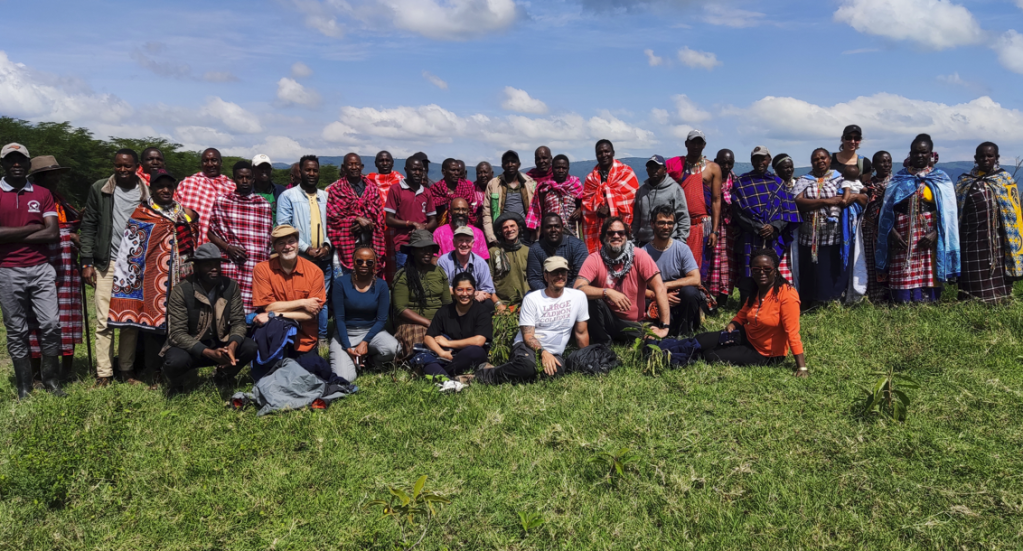
Current global efforts to restore degraded ecosystems are often treated as neutral, technical “fixes” rooted in Western scientific paradigms. In this paper we argue that ecological restoration is an inherently socio-political act that can inadvertently reinforce power imbalances and sideline the diverse values of local populations. To move toward more equitable and sustainable outcomes, the authors advocate for a biocultural restoration framework. This approach moves beyond simple community participation by explicitly integrating cultural meanings, diverse knowledge systems, and power dynamics into every stage of restoration planning and governance. The framework is built upon three essential pillars: political ecology, landscape biographies, and Traditional Ecological Knowledge (TEK). Political ecology is used to acknowledge and challenge the unequal power dynamics that often favor technocratic or market-driven “repair-mode” interventions over local needs. Landscape biographies provide a holistic historical understanding of how human-nature interactions have shaped a territory over millennia, ensuring that restoration goals do not inadvertently perpetuate past injustices. Finally, TEK offers invaluable, place-based insights into ecosystem functioning, helping to decolonize restoration practices. A key tool within this pillar is the identification of Cultural Keystone Species (CKS)—species with high cultural significance whose restoration can simultaneously support biodiversity and recover lost ecosystem functions. Ultimately, biocultural restoration seeks to transition scientific institutions from sole coordinators to collaborators and facilitators. By centering the voices of Indigenous Peoples and local communities (IP&LC), restoration can move away from narrow economic goals toward a pluriversal approach that recognizes the coexistence of multiple valid ways of relating to the land. This shift ensures that restoration efforts truly serve the diverse values of those who live within these social-ecological landscapes, fostering long-term ecological integrity and social justice.
 Relational Thinking