By Maria Tengö, Isabel Díaz-Reviriego, Álvaro Fernández-Llamazares, Pernilla Malmer, Wilfred V Alangui, Puaʻala Pascua, Prasert Trakansuphakon and Rosemary Hill
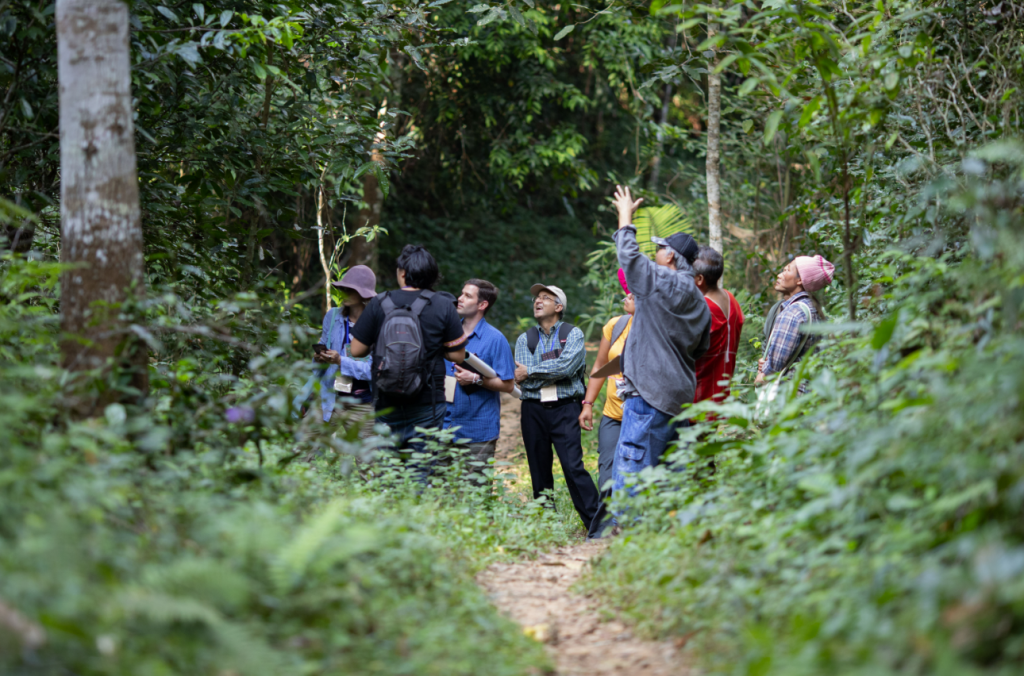
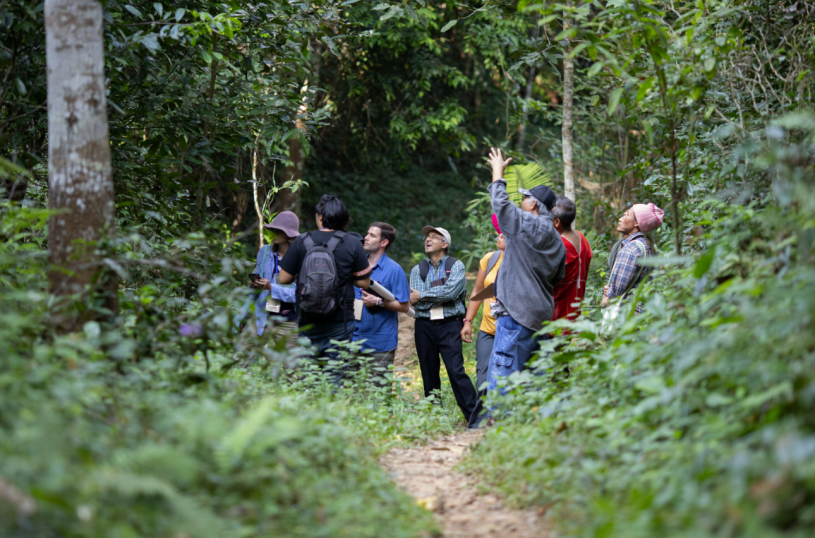
Caption: Discussions of the key messages from the IPBES pollination assessment was held in the forest, guided by holders of Indigenous and local knowledge. Photo from a dialogue across Indigenous, local and scientific knowledge systems reflecting on the IPBES Assessment on Pollinators, Pollination and Food Production, hosted in partnership with the community of Hin Lad Nai and Indigenous organizations.
Global environmental assessments of biodiversity are increasingly bringing together different types of knowledge. Working together to create knowledge (called “co-production”) is an important way to create fair and meaningful protection for biodiversity and peoples who over time have co-existed with nature, such as Indigenous Peoples and local communities. However, there is limited guidance for how to create knowledge syntheses that includes insights from, and respect for, the various ways of knowing that exists outside of academic knowledge production.
One approach is called the Multiple Evidence Base approach. It describes five main tasks for co-producing knowledge: (1) gathering knowledge; (2) translating for mutual understanding; (3) discussing and negotiating differences; (4) bringing it together; and (5) applying it. Of these steps, bringing together or “synthesizing” knowledge is often the hardest. Too much focus on consensus or agreement means that differences and tensions are obscured. This in turn can lead to loss of knowledge critical for biodiversity and also further discrimination of certain groups and their perspectives and rights.
In this study, we reviewed existing research and reflected on our own experiences – as both Indigenous and non-Indigenous – working on assessments within the international Intergovenmental Platform on Biodiversity and Ecosystem Services (IPBES). We focused on the roles of actors involved, the institutions that matter for their knowledge, and the processes that people use to collaborate, paying special attention to political and power issues.
Based on this work, we suggest practical actions to improve knowledge synthesis. These include:
- Addressing power imbalances and supporting respectful, productive disagreement.
- Creating shared decision-making systems that promote justice, rights, and healing from past harms.
- Encouraging open debate and critical thinking using tools that help explore different viewpoints.
- Supporting learning and self-reflection among participants.
- Strengthening Indigenous leadership and providing funding and space for Indigenous and local communities to practice and develop their own knowledge.
- Recognizing and respecting different ways of understanding and valuing time.
We conclude that efforts to connect science and policy for deep, transformative change will always involve political tensions and competing ideas. However, following our guidance can help make knowledge co-production more effective and support meaningful change toward a more just and sustainable future.

