We are delighted to feature this guest blog from Sarah Sandor (she/her), winner of the Best Lightning Talk award at the Aquatic Ecology SIG Annual Meeting 2026. Sarah takes us behind the scenes of her prize-winning research, shares highlights from her academic career so far, and reflects on her experience attending the conference. A special thank you to our sister journal, Functional Ecology, for sponsoring the meeting and supporting this vibrant community of aquatic ecologists.
Read the blog on Functional Ecologists here
About the research behind your presentation:
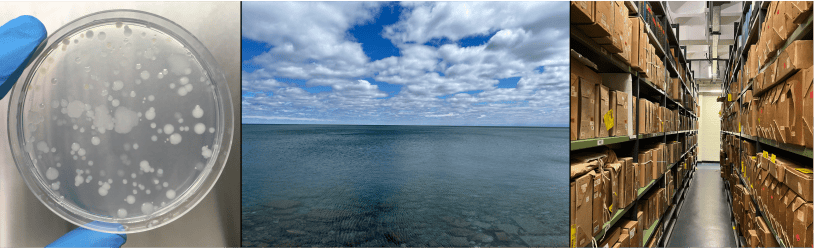
There is an invisible world contained within a single drop of ocean water. Shrink down small enough and you will see hundreds of microbial species living in complex communities. Phytoplankton that harness energy from the sun and fix vast amounts of carbon dioxide, releasing a myriad of organic molecules in the process. Heterotrophic bacteria that ravenously consume and transform this organic matter, respiring carbon dioxide and supporting higher trophic levels as they themselves are ultimately consumed. These dynamic exchanges between microbes and organic matter fuel marine ecosystems, facilitate the sequestration of carbon in the ocean and drive the global carbon cycle. But over the last decades, anthropogenic climate change has increasingly disrupted these vital processes. Addressing the resulting ecological challenges requires innovative approaches.
For example, how can we govern the ocean effectively in a way that encompasses these invisible processes that are crucial to the health of the planet, yet challenging to conceptualize and generally overlooked within existing regulatory frameworks? What insights can we gain about the historical impacts of early globalization and colonialism on the carbon cycle, a topic that is often absent from Western scientific discourse, by looking at records from centuries ago? And how might viewing changes to the global carbon cycle through historical and social science lenses inspire new research questions to investigate in the lab and field as we seek to improve our understanding of these microscopic processes?
Our new project ‘Governing the Invisible’ aims to answer these questions through an interdisciplinary collaboration that brings together microbial ecologists and geochemists (myself and Prof. Dr. Thorsten Dittmar), environmental and early modern historians (Dr. Brooke Grasberger and Prof. Dr. Dagmar Freist) and scholars of marine governance (Dr. Amelia Hine and Prof. Dr. Kimberley Peters). Our goal is to make visible these hidden aspects of marine environmental change and develop new scientific and socio-political approaches to climate governance.
We are still in the initial stages of this four-year project and the past months have been filled with thought-provoking discussions where we have shared our expertise and compared research approaches within our disciplines. I have been amazed by the degree of overlap we have already uncovered among our seemingly disparate fields: the use of networks to better understand our study systems (such as species interaction and actor/stakeholder networks), our experiences working with archives (from historical archives to sediment and bacterial archives), and our shared interest in considering how different scales of analysis, from micro to macro, render visible different aspects of the ocean and influence our perception of this vast environment.
One likely outcome from this project will be a perspective paper that focuses on one of these shared concepts and explores the connections among our disciplines to develop a broader theoretical framework for how researchers from diverse backgrounds can come together to tackle complex environmental problems. As a microbial ecologist, this project provides a unique opportunity (and challenge!) to think about my scientific research in new ways and consider how the work I do studying the role of marine microorganisms in the global carbon cycle fits within broader disciplinary contexts. I hope that we will inspire ecologists to consider what fascinating insights can be gained from engaging with diverse, interdisciplinary perspectives.
About you:
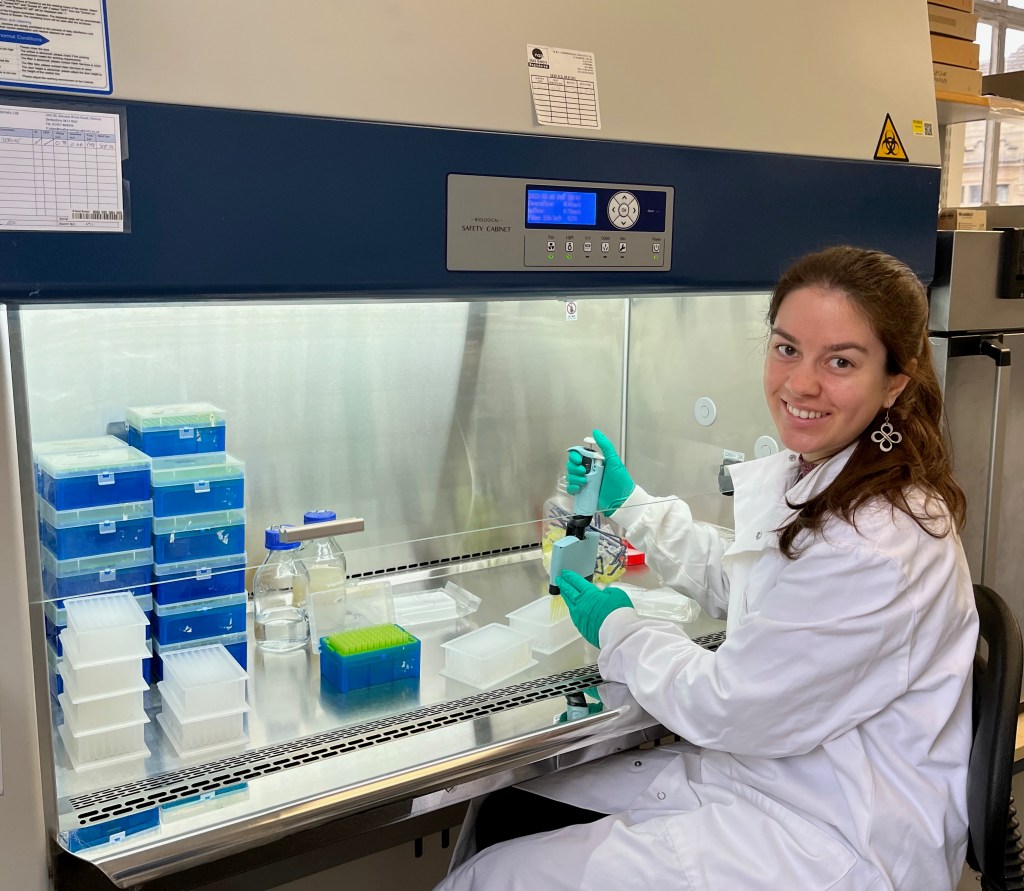
I have long had a passion for interdisciplinary learning. I completed my undergraduate degree in the McMaster University Arts & Science Program in Ontario, Canada, which is specifically designed for students who have a wide range of interests and do not want to specialize in one subject area. Throughout the program, I took courses covering a range of topics such as philosophy, global issues, technology studies, theatre, calculus and statistics, all while gaining valuable experience identifying connections between different disciplines. I chose to complete a combined honours degree in Molecular Biology and Genetics alongside my interdisciplinary program and through this, developed a particular interest in studying ecosystems with genetic approaches.
Over the past eight years, my research projects have taken me from terrestrial to aquatic environments, studying mushroom-insect interactions for my master’s project at McMaster University, freshwater microbial ecology during my PhD at the University of Cambridge and now marine ecosystems in my current postdoctoral position at the Institute for Chemistry and Biology of the Marine Environment in Germany. I am excited to be returning to my interdisciplinary roots through this ‘Governing the Invisible’ project and broadening the scope of my scientific research.
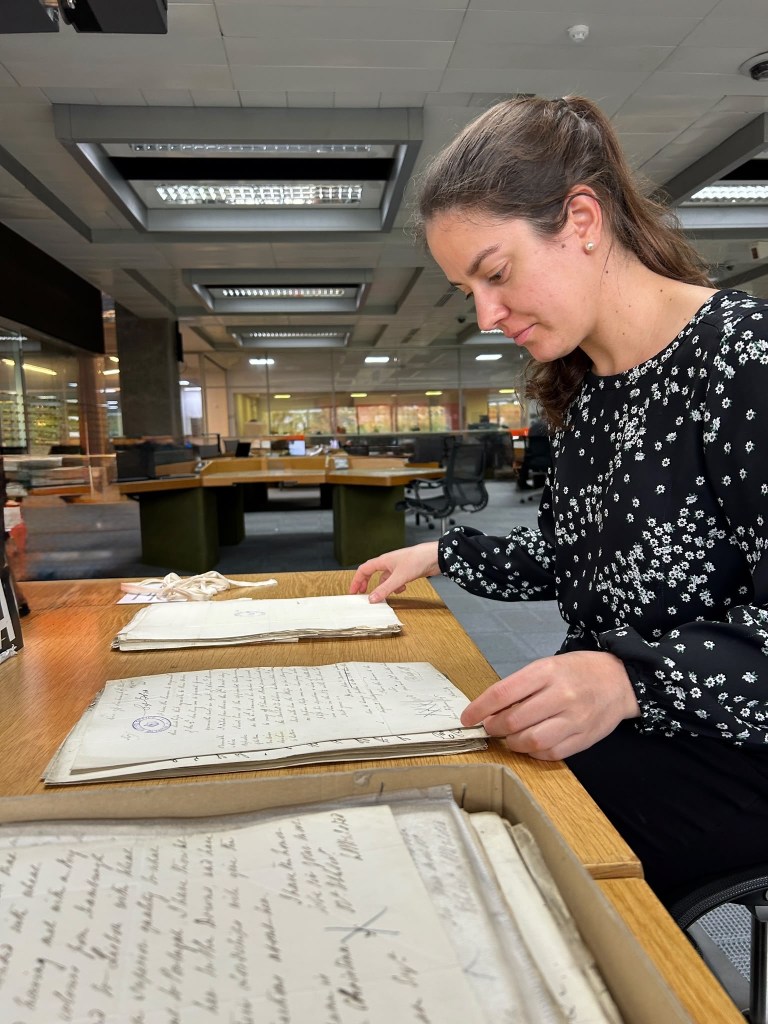
The best part about working in an interdisciplinary field is having the change to participate in new experiential learning opportunities that I typically have not been exposed to throughout my scientific career. For example, in September I visited The National Archives in London to learn more about The Prize Papers collection, this incredible collection of documents from ships that were captured by the British between the 1600’s and 1800’s, which my historian colleagues are examining for our project. I had never been to an archive before and it was fascinating learning about the collection and current historical research while handling documents that were written hundreds of years ago. Next year, I will attend an environmental history conference for the first time where I will meet researchers who are studying anthropogenic impacts on the environment from a completely different perspective as me. Without the cross-disciplinary connections I have gained through my current work, I likely never would have known these exciting projects or opportunities.
About the conference/event:
The BESAG symposium is an excellent forum for connecting with other early-career researchers and learning about the incredibly diverse range of aquatic ecology research being conducted. This was my second year attending and I cannot wait to participate again in the future. The relatively small size of the conference, and highly welcoming environment, meant that I had plenty of opportunities to meet new people and exchange ideas about current projects. For any early-career researchers who are thinking about attending their first conference, smaller symposiums like BESAG are a great place to start.
Aside from the fantastic presentations and informative workshops, a highlight for me was definitely the behind-the-scenes aquarium tour at the London Zoo to learn about the coral collection and breeding program. I had no idea how much work goes into maintaining these organisms! It was interesting seeing about how basic scientific research about marine life translates into real-world applications.
I love giving short-form, lightning talk presentations, like the one I presented at the symposium. The restricted amount of time challenges me to communicate my research in the most effective and engaging way possible. As I have always been passionate about theatre, these types of presentations offer the perfect opportunity to get creative, present the audience with a story and have some fun. I would highly encourage early-career researchers at all stages give this style of lightning presentation a try!

