By Margaret C. Stanley, Imogen E. Bassett, and Marie McEntee
This Plain Language Summary is published in advance of the paper discussed. Please check back soon for a link to the full paper.
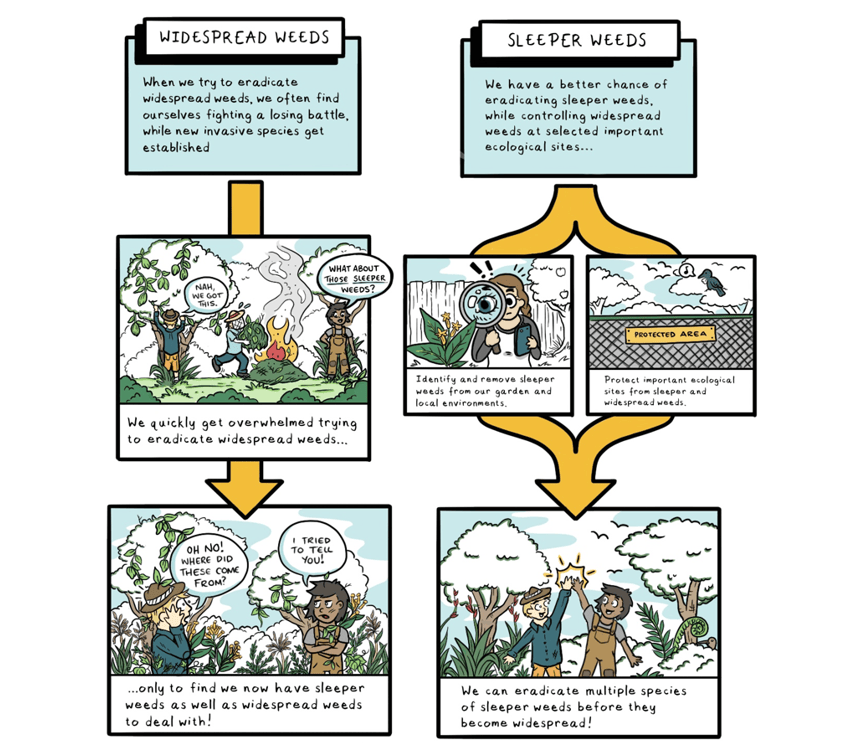
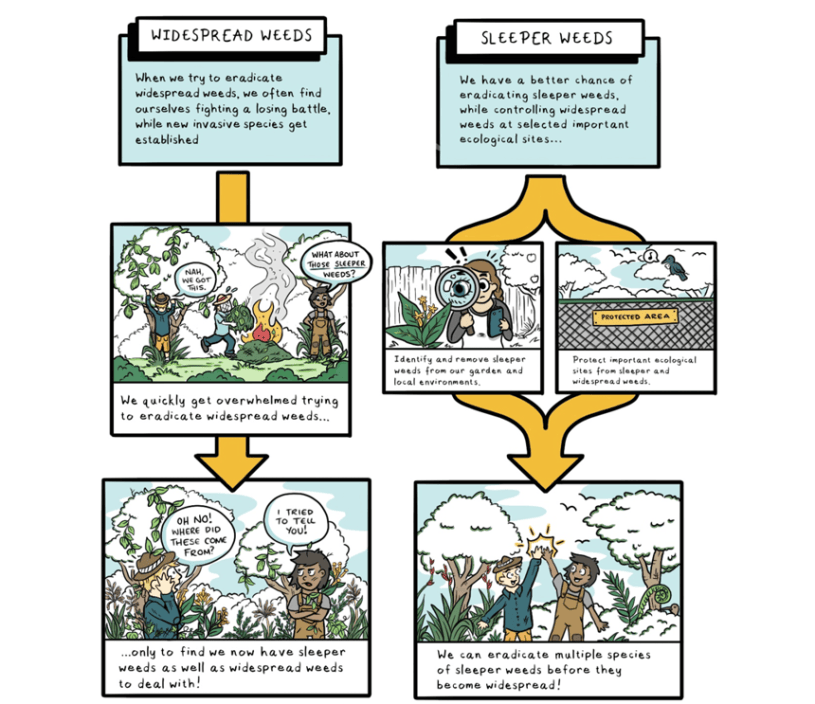
Invasive species are a major threat to nature, economies and people’s wellbeing. Because conservation resources are limited, managers need to focus on actions that have the greatest impact. Eradication, or completely removing a species, can be highly effective, but only when a species is found early and is still restricted to a small area. For many invasive species, preventing spread is a more realistic and cost-effective option. Once a species is widespread, efforts are usually focused on protecting important sites rather than removing the species everywhere.
However, in places like Aotearoa New Zealand where managing biological invasions is commonplace, public expectations do not always match these realities. Many community groups now play an active role in managing invasive species in local parks, reserves and neighbourhoods. However, despite working at a local scale, many people still see eradication of widespread invasive species as the main goal of conservation.
The Predator Free New Zealand 2050 programme has strengthened this belief by promoting eradication as the conservation goal. While this vision has inspired strong public support, it can also create unrealistic expectations for other invasive species, especially plants, invertebrates and pathogens. These species often spread quickly, reproduce in large numbers and can be difficult to find, making eradication unlikely once they are well established.
While scientists and conservation agencies have done a good job of helping the public understand the impacts of invasive species, the next challenge is helping communities understand which management approaches are practical and effective. This requires more collaboration, open discussion of trade-offs and shared decision-making about goals.

