By Giovanna Chávez-Miguel, Janika Hämmerle, Stef de Haan, Stefan Sieber and Michelle Bonatti
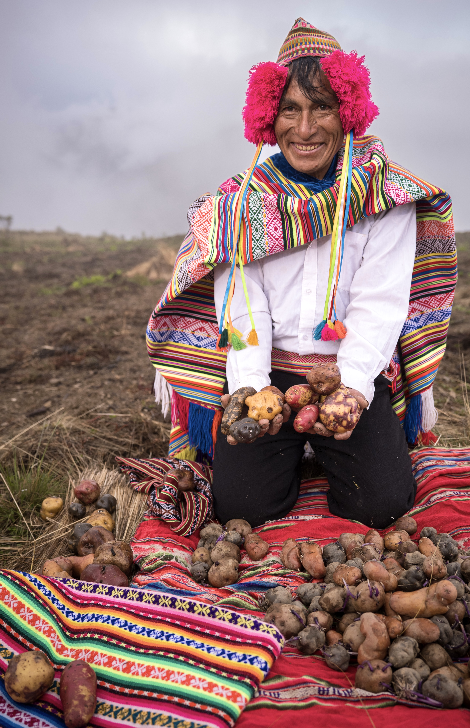
Photograph: Giovanna Chavez-Miguel. Consent was provided for the use of this image.
This Plain Language Summary is published in advance of the paper discussed. Please check back soon for a link to the full paper.
The Andes Mountains are home to a remarkable variety of food products, which are grown at different altitudes. Peru is also the birthplace of the potato. To date, at least 4,000 varieties of potato have been identified, mainly maintained by family farmers in the highlands. These include bitter varieties, floury types and colourful heirloom potatoes grown at over 4,000 metres above sea level. This extraordinary diversity has been cultivated by Andean farming families over centuries and is now under threat due to the increasing influence of industrial agriculture.
Yet in the Peruvian highlands, these varieties persist, sustained by farmers who maintain traditional agricultural practices and exchange seeds within these Andean food networks. For millennia, farmers in mountainous regions have adapted and traded produce at bustling open-air markets, swapping potatoes, tubers and grains for tropical fruits, vegetables and animal products. This territorial market network is a prime example of a truly sustainable, localised food system.
This study analyses the role that local markets play in maintaining potato diversity. To answer this question, we first traced the origins of the potatoes and mapped the varieties sold at markets to analyse the territorial embeddedness of markets. Our findings showed that territorial markets operate as a tightly woven local network, connecting farming communities with buyers, traders and other producers in nearby towns. We demonstrated that these markets are often the main selling space for farmers and also serve as important spaces for informal seed exchange, helping rare varieties to remain in circulation.
By comparing markets across the region, we then identified the key characteristics that make some markets work better than others for family farmers. Not all markets are equally beneficial for producers. Those farmer-based markets, where communities sell cooperatively, offered the best conditions, providing fairer prices, stronger community ties and social cohesion, as well as the widest variety of native potato types.
Based on these results, we argue that territorial markets are vital, functioning infrastructure that supports the food security of farmers and rural communities, rather than being relics of the past. Therefore, governments and development agencies should actively protect and strengthen them.

