By Pauline Ross and Mitch Gibbs
This Plain Language Summary is published in advance of the paper discussed. Please check back soon for a link to the full paper.
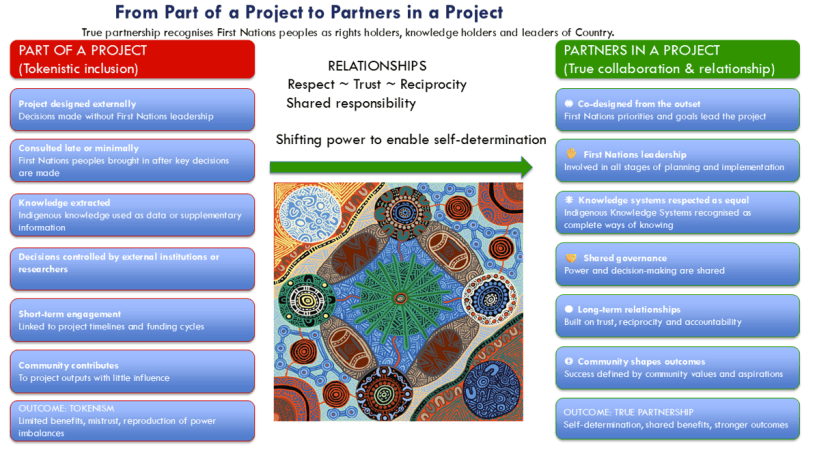
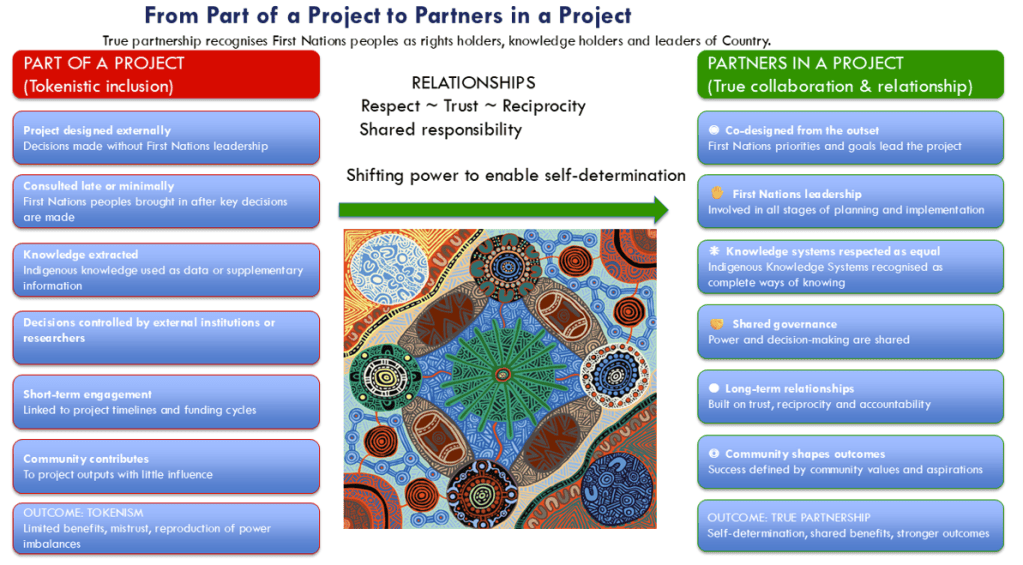
For more than 60,000 years, First Nations peoples have cared for Sea Country using deep knowledge they have passed down through generations. Today, marine environments face growing threats including pollution, overfishing, habitat loss and climate change. Too often, however, decisionmakers and managers invite Indigenous communities into marine research and restoration projects only after they have already developed and secured plans and funding. This limits genuine collaboration and can reduce participation to tokenism, ignoring intergenerational Indigenous knowledge.
This paper argues that Indigenous communities should be equal partners from the very beginning. Indigenous communities and other decisionmakers or managers should co-design restoration projects, with shared decision-making, respect for Indigenous Knowledge Systems, and support for Indigenous leadership. We propose Sea Country Restoration Plans and Indigenous-led Research and Restoration Committees to guide restoration activities.
From project inception, marine restoration must make First Nations peoples partners rather than mere parts of restoration projects. Co-designed Sea Country Restoration Plans and shared governance can strengthen biodiversity, culture, wellbeing and restoration outcomes.

