By Rafid A. Shidqi, Yodhikson M. Bang, Edy Topan, and Hollie Booth
This Plain Language Summary is published in advance of the paper discussed. Please check back soon for a link to the full paper.
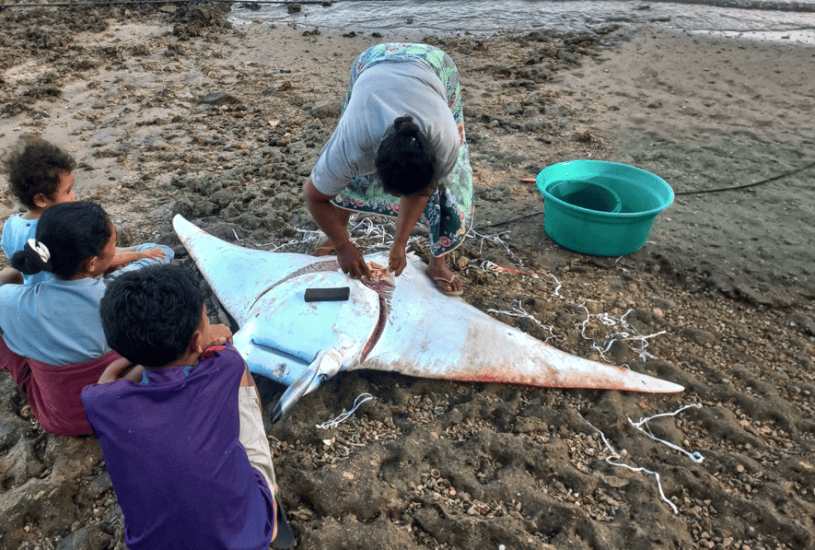
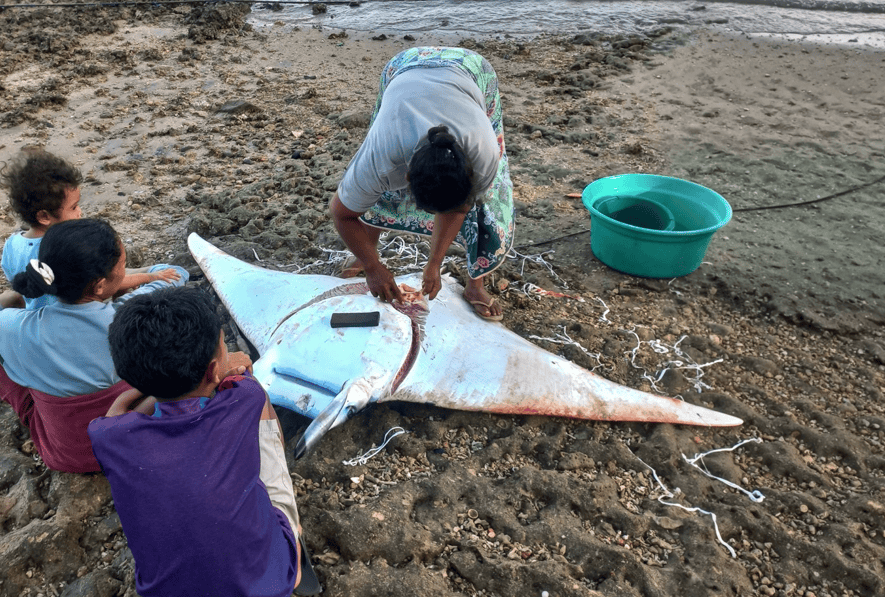
Mobula rays are among the world’s most threatened rays and recently received strict international protection. In Indonesia, particularly in East Flores, people actively exploit mobula rays. People consume their meat locally and export their gill plates internationally. However, Indonesian law fully protects two species, M. birostris and M. alfredi, meaning that catching or consuming them carries legal consequences. However, such protections are controversial, frequently invoking the negative impacts conservation can have on people who use a species. “Food security” is often the frame of these conservation critiques. Yet people using this term rarely define it. Does protecting mobula rays mean people will go hungry? And are mobula rays the only food source available to these communities?
Our study seeks to address these questions across three villages in East Flores that have historically relied on mobula rays. Our findings show that although people do consume mobula rays, losing access to them does not necessarily lead to hunger. Spoiler alert…people actually do not like consuming mobula rays. Instead, mobula rays serve primarily as an economic resource. The income from catching mobula rays enables people to purchase other desired food items, such as fruits and other fish, like mackerel. Access to income, more than the species itself, determines whether a household can achieve its state of being “food secure.”
So, what does this mean for conservation? Our study argues that conservation must address far more than species protection alone. The connection between mobula ray conservation and food security is real but nuanced. Broader factors, such as exposure to natural disasters or having sufficient financial savings during difficult fishing seasons, also shape household food security in East Flores. Meaningful conservation outcomes for both mobula rays and the people who live alongside them require accounting for all of these dimensions.

