By Hamza Moluh Njoya, Chiara Thomas, Kossi Hounkpati, Kossi Adjonou, Kouami Kokou, Stefan Sieber and Katharina Löhr
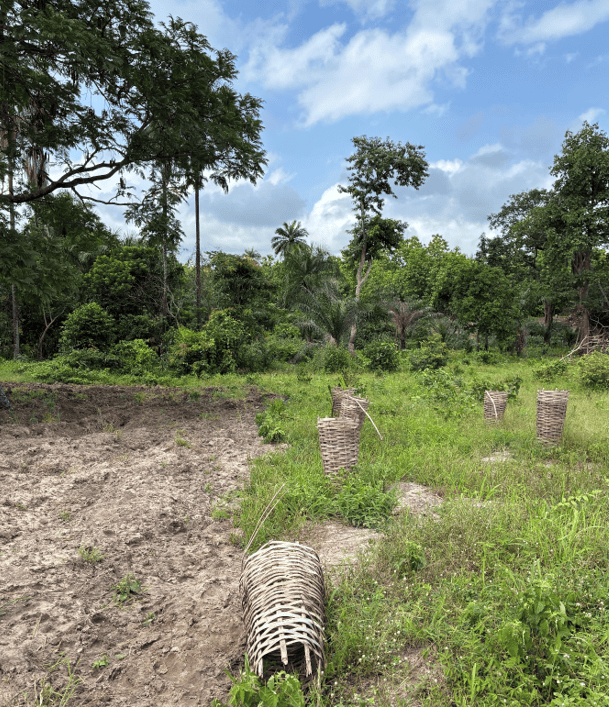
Photo credit: Löhr ,2026.
This Plain Language Summary is published in advance of the paper discussed. Please check back soon for a link to the full paper.
Planting trees alone is not enough to restore degraded landscapes. Through this study, we found that successful forest restoration also depends on trust, cooperation, and strong relationships among the people involved. At the same time, well-designed restoration projects can strengthen these relationships, creating a positive cycle that benefits both people and nature.
We carried out this research in central Togo, where the Forests4Future initiative has promoted forest landscape restoration. We spoke with community members, traditional leaders, project staff, and other local actors through group discussions and individual interviews to understand their experiences with restoration activities. Rather than focusing only on environmental outcomes, we explored how people work together, solve problems, and participate in restoring their landscapes.
Our findings show that communities with stronger social ties were generally more willing to participate in restoration activities. Where people trusted one another, shared responsibilities, and worked together, they were more likely to plant and protect trees, resolve conflicts, and support restoration over the long term. We also found that restoration projects can strengthen communities by creating opportunities to work together, share knowledge, and build a shared sense of responsibility. However, these benefits were not automatic. Historical conflicts, insecure land ownership, unequal access to project benefits, and limited financial and technical resources sometimes reduced participation and cooperation. Trusted local project supervisors played an important role in overcoming these challenges by improving communication, building confidence, and helping communities resolve disputes.
Our study shows that restoring forests is as much about people as it is about trees. Restoration programmes are more likely to succeed when local communities are actively involved in planning and decision-making, when local knowledge is respected, and when benefits are shared fairly. By placing people at the centre of restoration efforts, policymakers, practitioners, and development organisations can design initiatives that not only restore degraded landscapes but also build stronger, more resilient communities.

