By Gareth Enticott, Juan Pablo Alzate Tamayo, Hywel Morgan, Damian Maye, Chris Short, Kareemah Chopra, and Edward Codling
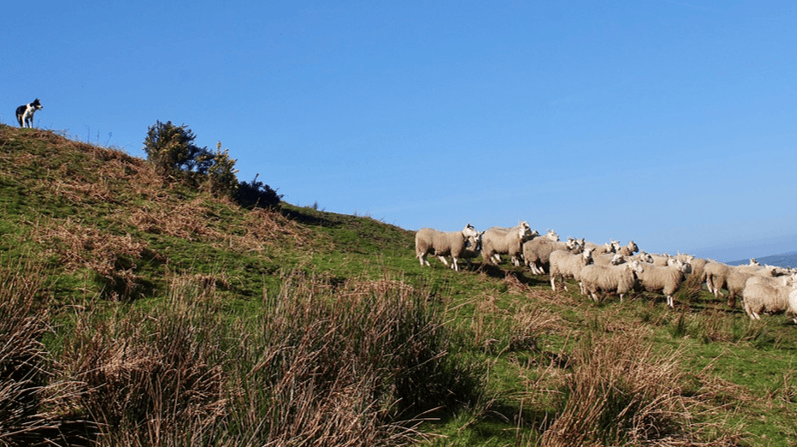
Photo credit: G Enticott
This Plain Language Summary is published in advance of the paper discussed. Please check back soon for a link to the full paper.
Virtual fencing is a technology that substitutes GPS-collars and digital boundaries for traditional, physical boundary . People often promote virtual fencing as a way to restore nature by managing livestock grazing behaviours. In our research, we found that it does much more than that. While virtual fencing helped control where sheep grazed, it also changes how the landscape, cared for animals, and thought about belonging to place by people that use it.
We worked with a sheep farmer in the Welsh uplands to test virtual fencing over an entire grazing season. Normally, the sheep grazed an open common and stayed in one area that they were used to. This grazing practice is known as hefting. Our study tried to change where the sheep normally grazed by fitting them with GPS collars. The collars were linked to an app that created new grazing areas with invisible boundaries. We tracked where the sheep moved and regularly discussed the farmer’s experiences of using the technology.
The system worked well. Young sheep quickly learned their new grazing areas and stayed within them. This suggests virtual fencing could become a useful tool for managing grazing and supporting nature restoration projects, such as controlling invasive vegetation or reducing the risk of wildfires.
However, our study also showed that the effects of virtual fencing extend beyond livestock management. The technology allowed the farmer to monitor sheep remotely and reduced the need for routine checks on the hill. Yet rather than weakening his connection to the landscape, it made him more aware of what he valued about being there. He continued to visit the hill regularly, not because he needed to check sheep, but because spending time on the land contributed to his sense of well-being.
To help understand these experiences, we drew on the Welsh legend of the Lady of the Lake, which is closely associated with the study area. The story highlights the importance of maintaining relationships across boundaries while respecting difference. We found similar themes in the farmer’s experience of virtual fencing. The technology created new connections between farmer, sheep and landscape, but also raised questions about how people maintain traditional relationships with place.
Our research suggests that debates about digital farming should not focus only on whether technologies work. They should also ask how technologies reshape relationships between people, animals and environments. As farming becomes increasingly digital, questions of care, belonging and connection to place may be just as important as efficiency and productivity.

